Tired of the content creation hamster wheel? The constant pressure to produce fresh, engaging material can be overwhelming. But what if the secret to scaling your output isn't creating more content, but getting more from the content you already have?
That’s the power of content repurposing. It’s a smart approach that transforms your existing assets into a diverse library of formats, allowing you to reach new audiences and reinforce your message across multiple channels.
This guide will show you how to work smarter, not harder. We’ll explore 10 proven content repurposing strategies that save time, amplify your reach, and dramatically increase the ROI of every piece you create. You’ll learn how to turn a single blog post into a compelling video, a webinar into an entire micro-learning library, and customer feedback into powerful marketing assets.
Let's unlock the hidden potential within your content archive and build a more sustainable, powerful marketing engine.
1. Turn Blog Posts into Engaging Videos
One of the most effective content repurposing strategies is turning a popular blog post into a dynamic video. Why? Because you're leveraging content that has already proven its value with your audience. The article's outline provides a ready-made script, making the leap to video production much smoother.
This strategy helps you connect with new audiences on platforms like YouTube, TikTok, and Instagram, where visual content reigns supreme. It’s perfect for breaking down complex topics, showing a "how-to" process, or simply putting a human face to your brand. For instance, a detailed listicle can become a step-by-step YouTube tutorial, while a key section can be adapted into a punchy 60-second Instagram Reel.
How to Do It:
- Find a Winner: Start with your analytics. Identify a blog post that already gets significant traffic and engagement.
- Create a Storyboard: Use the blog's headings (H2s and H3s) as a blueprint for your video's structure. Plan your shots, graphics, and the overall flow.
- Reuse Visuals: Incorporate charts, graphs, and images from the original post directly into your video to maintain consistency and save time.
- Cross-Promote: Once the video is done, embed it within the original blog post. This gives your readers a new way to consume the content and provides an SEO boost for both formats.
This method caters to different learning preferences and maximizes your content's impact. For those looking to streamline this process, modern tools can significantly help. Find out more about how AI can assist with transforming blog posts into video scripts.
2. Convert Your Podcast into Multiple Assets
A single podcast episode is a goldmine of content. By treating it as a central "hub," you can create numerous smaller "spokes" of content to share across different platforms. This "hub-and-spoke" model extends your reach to people who prefer reading, watching short videos, or scanning quick visual takeaways.
This strategy works exceptionally well for interview shows or expert discussions. A one-hour conversation can be transcribed into a full blog post, its most exciting moments clipped into shareable YouTube Shorts, and its best quotes turned into branded graphics for social media. This is how top podcasters amplify their reach, using compelling clips to drive traffic back to their full episodes.
How to Do It:
- Start with a Transcript: Use a reliable service to get an accurate transcription of your episode. This document is the foundation for everything else.
- Find the "Golden Nuggets": Pinpoint the most valuable 1-2 minute segments. These are perfect for creating short video clips for TikTok, Instagram Reels, and YouTube Shorts.
- Extract Key Quotes: Pull out powerful quotes or statistics. Use a tool like Canva to turn them into eye-catching graphics for X (formerly Twitter) and LinkedIn.
- Create Themed Blog Posts: Does your episode cover multiple topics? Break the transcript into several shorter, focused blog posts. A Q&A section can easily become a standalone FAQ article, boosting your SEO.
This approach ensures one recording session fuels your content calendar for weeks. Discover how automated tools can assist with analyzing podcast transcripts for key content.
3. Transform Webinars into a Content Library
Don't let your valuable webinar recordings gather digital dust. A single live event can be systematically deconstructed into an entire content library of evergreen assets. This extends the impact of your expertise far beyond the original attendees and serves different audience segments and funnel stages.
This method is ideal for businesses that focus on educational content. A one-hour webinar can be segmented into a bite-sized video course, summarized in a detailed blog post, and its key quotes turned into engaging social media graphics. This is how industry leaders continuously generate leads and nurture their audience with high-value, repurposed material.
How to Do It:
- Plan Ahead: Before the webinar, structure your presentation into natural "chapters." This makes it much easier to edit into standalone videos or blog sections later.
- Segment the Recording: Break the full webinar into smaller, topic-specific video clips. You can upload these as a mini-series to YouTube or use them as modules for an on-demand course.
- Extract Different Asset Types: Transcribe the audio for a full blog post, pull key stats for social media graphics, and convert the slide deck into a downloadable PDF lead magnet.
- Build Dedicated Landing Pages: Create a unique landing page for each major repurposed asset (like the on-demand course or the downloadable guide) to track performance and tailor promotions.
This strategy ensures the significant effort of a live webinar pays dividends for months or even years. Explore tools that can help you automatically transcribe and extract insights from your recordings at LunaBloom AI to streamline your webinar repurposing.
4. Cluster Social Media Posts into Pillar Content
A powerful, often-missed content repurposing strategy is clustering related social media posts into a larger, more comprehensive asset. Think of your individual posts as building blocks. When you group them by theme, you can construct a substantial piece of pillar content like a blog post, guide, or whitepaper.

This approach uses real-world data to guide your content creation. By identifying what already resonates with your audience on social media, you can confidently invest time in creating long-form content that you know will perform well. It's a smart way to turn fleeting engagement into lasting authority.
How to Do It:
- Analyze Your Engagement: Look at your social media analytics to find which topics or post series consistently get the most likes, shares, and comments. These are your prime candidates for expansion.
- Map Your Themes: Group your top-performing posts by theme. This will help you visualize the structure of a larger article or guide.
- Expand and Elaborate: Take a successful social media series and flesh it out into a detailed blog post. Use the comments and questions from your audience to address knowledge gaps directly. For more specific tactics, explore these 12 proven strategies for social media content.
- Promote the New Piece: Once your long-form content is live, link back to it from the original social posts that inspired it. This drives traffic and shows your audience you're listening.
Discover how advanced tools can streamline grouping social posts into larger content pieces.
5. Expand an Infographic into a Full Campaign
This strategy flips the usual process on its head. Instead of summarizing a blog post into an infographic, you start with a visually compelling infographic and expand it into more detailed content. This approach leverages the shareability of data visualization to capture initial attention, then provides deeper context for those who want to learn more.
This method is highly effective for presenting original research, complex data, or step-by-step processes. The infographic acts as the central "anchor" asset, which can then be deconstructed into detailed blog posts, short video explainers, and social media carousels.
How to Do It:
- Start with Strong Data: Build your infographic on original research, a unique data compilation, or a valuable framework. This originality makes it a powerful, shareable asset from the start.
- Break It Down: Deconstruct the infographic into its individual data points or sections. Each one can become a slide in an Instagram carousel, a talking point in a video, or a sub-heading in a blog post.
- Write an Explanatory Article: Create a long-form blog post that dives deep into each point from the infographic. Use the visual as the centerpiece and provide the story, context, and implications behind the data.
- Make It Sharable: Include an embed code directly on your blog page. This makes it easy for others to share your visual on their own sites while giving you a valuable backlink.
This strategy transforms a single data-rich visual into a multi-channel content ecosystem. Discover how AI tools can help you develop comprehensive articles from your visual data with our Infographic Expansion Strategy guide.
6. Adapt Email Newsletters for Social Media
Your email newsletters are often packed with well-crafted insights and stories that can be brilliantly adapted for platforms like LinkedIn, Instagram, and X. This underrated content repurposing strategy leverages the direct, personal tone of email to create authentic and engaging social content that reaches a wider audience.
This strategy is great for sharing deep insights in a digestible format. For example, an educational email sequence can become a week-long LinkedIn post series, while a data-rich newsletter can be broken down into an insightful Instagram carousel. You've already done the hard work of writing great content; now it's time to give it a second life.
How to Do It:
- Pull Out Key Takeaways: Extract the most impactful sentences or data points from your emails to create standalone, thought-provoking social media posts.
- Repurpose Subject Lines as Hooks: Your best-performing email subject lines are proven attention-grabbers. Use them as powerful opening lines for your social media captions.
- Turn Sequences into a Series: A multi-part email sequence can be easily mapped out as a scheduled social media series. Release one part each day to build momentum.
- Adapt Your CTAs: Change email-specific calls to action (like "Click here") to social-friendly prompts (like "Comment below" or "Share this") to encourage platform-native engagement.
By atomizing your email content for social channels, you reinforce your core message across multiple touchpoints and bridge the gap between your most loyal subscribers and a broader social audience.
7. Build a Content Ecosystem from Case Studies
Customer success stories are marketing gold. Instead of publishing a one-off case study, you can transform a single customer win into a comprehensive content ecosystem. This approach amplifies the power of social proof and builds credibility across your entire marketing funnel.
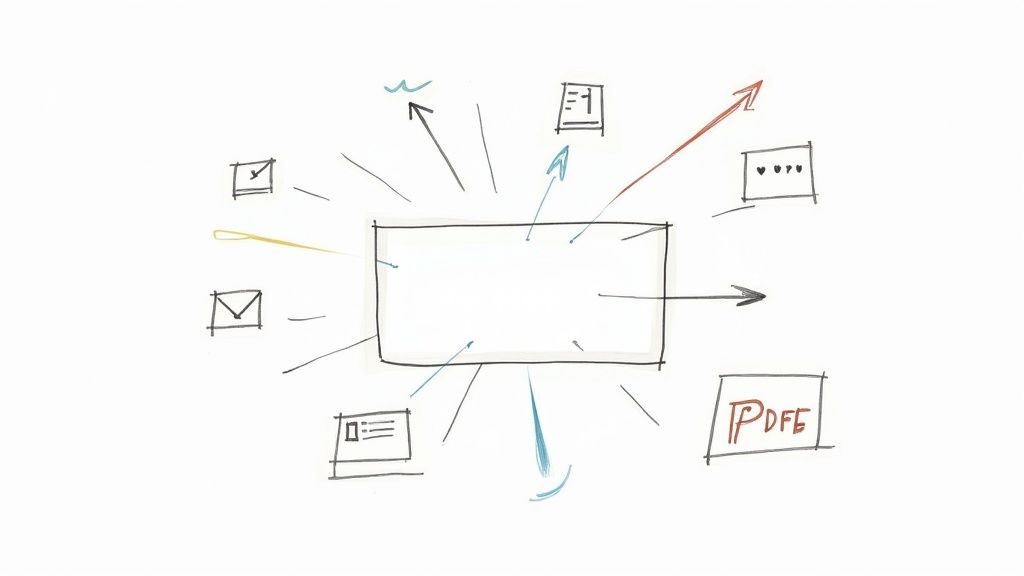
A detailed PDF case study can be the source material for a compelling blog post, a short video testimonial, impactful social media quote graphics, and even a segment in an email newsletter. This ensures your success stories reach prospects on every platform and in their preferred format.
How to Do It:
- Structure for Repurposing: When creating the case study, build it around a clear "Problem, Solution, Result" narrative. This structure makes it easy to pull snippets for different formats.
- Record the Interview: While interviewing the customer, record the video. This footage can be edited into a powerful video testimonial with minimal extra effort.
- Extract Key Metrics: Pull the most impressive statistics and quotes. Use them to create shareable graphics for LinkedIn and X that serve as powerful social proof.
- Tailor for Different Audiences: Create a high-level summary for executives and a more technical version for practitioners. This ensures the success story resonates with every decision-maker.
By treating each case study as a pillar piece of content, you can generate a wealth of marketing materials that consistently reinforce your value. Find out how AI can help generate marketing assets from long-form content.
8. Deconstruct a Research Report into a Content Series
A comprehensive research report is a major investment. To maximize its ROI, deconstruct that data-rich asset into an extended content series. This approach atomizes your findings into blog posts, infographics, webinars, and social media updates, keeping your audience engaged over weeks or months.
This is a premier strategy for establishing thought leadership. By methodically releasing key findings, you create multiple touchpoints from a single piece of research. HubSpot’s annual "State of Marketing" report is a prime example; they expertly transform their core data into dozens of articles, social graphics, and presentations, cementing their expertise.
How to Do It:
- Plan a Phased Release: Create a content calendar that maps out how each key finding will be revealed. Dedicate a week or a content theme to each major data point.
- Create Spin-Off Assets: For each key finding, create a unique piece of content. Turn a surprising statistic into a shareable infographic, a complex section into a detailed blog post, and the main themes into a webinar.
- Build Interactive Elements: Create an interactive quiz or calculator based on your data. This allows users to engage with your findings in a personalized and memorable way.
- Segment for Niche Audiences: Tailor smaller, industry-specific reports from your broader data set. For example, a report on marketing trends could be broken down into mini-reports for "SaaS Marketing" or "B2B Marketing."
This method ensures your resource-intensive research becomes a cornerstone of your content strategy. Explore how AI can help break down dense reports into content outlines.
9. Segment Long-Form Content into Bite-Sized Pieces
Breaking down substantial assets like ebooks or ultimate guides into smaller, digestible pieces is a classic content repurposing strategy. Content segmentation makes dense information more accessible and extends its promotional lifespan significantly.
This strategy is perfect for getting maximum value from your most in-depth, cornerstone content. For instance, an ebook on digital marketing can be broken down chapter by chapter into a 10-part blog series. This approach allows you to capture a wider audience with each individual segment while promoting the full guide as a downloadable asset.

How to Do It:
- Design for Segmentation: When creating a new ebook, structure it with clear, self-contained chapters from the start. This makes future repurposing much easier.
- Use a Hub-and-Spoke Model: Publish each chapter as a separate blog post (the spokes) and create a central summary page (the hub) that links out to every piece. This is excellent for SEO and user experience.
- Label the Series: Clearly mark each piece as part of a series (e.g., "Part 1 of 5") to encourage readers to consume the entire sequence.
- Vary the Formats: Don't just create blog posts. Turn one chapter into a checklist, another into an infographic, and a third into a short "how-to" video.
This method transforms a single high-effort piece into a multi-channel campaign. You can use an AI assistant to quickly summarize ebook chapters into blog outlines to accelerate this process.
10. Curate and Amplify User-Generated Content (UGC)
One of the most authentic content repurposing strategies is to curate and amplify content created by your own audience. By collecting customer reviews, social media mentions, and testimonials, you can build powerful social proof and generate high-trust marketing material with minimal effort.
This strategy is ideal for showcasing genuine customer experiences and building brand loyalty. A collection of positive customer tweets can be designed into a compelling social media graphic, while a detailed user story can be developed into an in-depth case study. Brands like GoPro have built their entire marketing model on featuring breathtaking customer videos on their official channels.
How to Do It:
- Create a Branded Hashtag: Promote a unique hashtag to encourage users to share their experiences with your product, making it easy to find and collect relevant UGC.
- Always Ask for Permission: Before repurposing someone's content, always get their clear, written permission. Proper credit and attribution are essential.
- Create Themed Roundups: Compile the best UGC into monthly blog posts, email newsletters, or video compilations. A "Customer of the Month" spotlight can be a highly effective format.
- Turn Praise into Assets: Transform glowing reviews into visually appealing graphics for your website's homepage, product pages, or social media ads to add authenticity and credibility.
This method provides a steady stream of genuine content and makes your audience feel seen and valued, turning happy customers into active brand advocates. For inspiration, see how businesses leverage customer testimonials.
10-Point Content Repurposing Comparison
| Strategy | Implementation Complexity 🔄 | Resource Requirements ⚡ | Expected Outcomes 📊 | Ideal Use Cases 💡 | Key Advantages ⭐ |
|---|---|---|---|---|---|
| Blog Post to Video Content | Moderate — scripting, filming, editing 🔄 | Medium — camera/software, editor, time ⚡ | High — increased engagement & SEO lift 📊 ⭐⭐⭐ | Evergreen blogs → YouTube, Reels, short tutorials 💡 | Cost-effective reuse of research; multi-format reach ⭐ |
| Podcast Repurposing (Audio to Multiple Formats) | Moderate–High — transcription, editing, clipping 🔄 | Medium — transcription tools, editors, editors for clips ⚡ | High — many assets from one episode; strong ROI 📊 ⭐⭐⭐ | Long-form interviews → blog posts, clips, infographics 💡 | Maximizes production investment; clip-based virality ⭐ |
| Webinar to Content Library | High — recording quality, chaptering, segmentation 🔄 | High — post-production, LMS/CMS, gating tools ⚡ | Very high — lead gen, evergreen courses, multiple touchpoints 📊 ⭐⭐⭐ | Live trainings → on-demand courses, gated resources 💡 | Produces lead magnets and extended educational assets ⭐ |
| Social Media Content Clustering | Medium — analytics + editorial planning 🔄 | Low–Medium — analytics tools, content strategist ⚡ | Medium — pillar content and improved topical authority 📊 ⭐⭐ | Brands with consistent social output → pillar posts, guides 💡 | Data-driven topic selection; efficient expansion of short posts ⭐ |
| Infographic Expansion Strategy | Medium — design + narrative building 🔄 | Medium — designers, data viz tools, copywriting ⚡ | Medium — high shareability and backlink potential 📊 ⭐⭐ | Data/visual-heavy topics → blogs, explainers, carousels 💡 | Visually engaging; strong on Pinterest/visual platforms ⭐ |
| Email Content to Social Media Series | Low–Medium — adapt tone and format 🔄 | Low — copywriter and scheduling tools ⚡ | Medium — extends reach from subscribers to followers 📊 ⭐⭐ | Newsletter-driven creators → social threads, carousels 💡 | Leverages existing copywriting; consistent voice across channels ⭐ |
| Customer Case Studies to Content Ecosystem | Medium–High — interviews, approvals, edits 🔄 | Medium — interviews, production, legal review ⚡ | High — builds trust and improves conversions 📊 ⭐⭐⭐ | B2B/B2C success stories → sales enablement, testimonials 💡 | Strong social proof; multi-audience formats for funnel stages ⭐ |
| Research Report to Content Series | High — data segmentation, interactive tools 🔄 | High — researchers, analysts, developers ⚡ | Very high — thought leadership, backlinks, long-term value 📊 ⭐⭐⭐ | Original research → phased releases, webinars, tools 💡 | Establishes authority and generates gated assets for leads ⭐ |
| Long-Form Content Segmentation | Medium — chaptering, internal linking 🔄 | Medium — editing, SEO optimization ⚡ | High — improved SEO, session depth, multiple entries 📊 ⭐⭐ | Ebooks/guides → multi-part blog series, email sequences 💡 | Makes dense content accessible; sustains content calendar ⭐ |
| User-Generated Content Curation and Amplification | Low–Medium — moderation and curation 🔄 | Low–Medium — community managers, legal clearance ⚡ | Medium — authentic engagement and social proof 📊 ⭐⭐ | Consumer brands with active audiences → campaigns, roundups 💡 | Authentic, low-cost content with strong community signals ⭐ |
From Content Creation to Content Multiplication
The lesson from these ten strategies is clear: effective marketing today is less about the relentless creation of new content and more about the intelligent multiplication of your existing assets. It's a shift from a "one-and-done" mindset to a "create once, distribute forever" philosophy.
This approach transforms a single, high-value piece of content into a diverse ecosystem that meets your audience where they are, in the format they prefer. It saves you time, amplifies your expertise, and builds a powerful, interconnected web of resources that continuously reinforces your brand authority.
Your Next Steps
So, where do you begin? Don't try to implement everything at once. Instead, start small and build momentum.
- Audit and Select: Review your analytics to find one high-performing piece of content. A popular blog post, podcast episode, or case study is a great place to start.
- Choose a Strategy: Pick one or two strategies from this list that best fit your goals and your chosen content. A detailed blog post is perfect for the "Blog Post to Video" strategy, while a customer interview is ideal for building a "Case Study Ecosystem."
- Leverage Technology: Use modern tools to speed up the process. For example, mastering converting YouTube video to text with Whisper AI can save you hours of manual transcription, allowing you to quickly create blog posts and social media captions from your videos.
- Measure and Refine: Track the performance of your new, repurposed assets. Which formats are driving the most engagement? Use that data to make smarter decisions for your next project.
By adopting this systematic approach, you can build a sustainable content engine that drives consistent growth without leading to creative burnout. You're no longer just a content creator; you're a content multiplier.
Ready to put these strategies on autopilot? LunaBloom AI is designed to be your content repurposing co-pilot, instantly transforming your long-form articles, podcasts, and videos into dozens of social media posts, email newsletters, and more. Stop spending hours manually adapting content and start multiplying your impact with a single click at LunaBloom AI.