Finding the best voice cloning software can transform how you create content. Whether you're making marketing videos, e-learning modules, or engaging social media posts, this technology lets you create a realistic digital copy of a human voice. This brings incredible consistency and scalability to your projects.
This guide cuts through the noise. It provides a clear, comprehensive overview of the top platforms available today, so you can make the right choice without the guesswork.
We've done the heavy lifting for you, analyzing twelve leading solutions, including powerful tools like LunaBloom AI, ElevenLabs, and Descript. Our goal is to help you select the right software for your specific needs, whether you're a solo creator, a small business, or a large enterprise. This isn't just a list of features; it's a practical guide with real-world applications. Understanding AI integration in post-production can further highlight how these tools fit into a modern workflow.
In this article, you will find:
- Detailed Breakdowns: In-depth reviews of each platform's core features, from voice quality to language support.
- Use-Case Scenarios: Clear examples of how to use each tool for marketing, education, social media, and more.
- Direct Comparisons: Side-by-side analysis of pricing, pros, and cons to make your decision easier.
Each entry includes screenshots and direct links to the platforms, so you can start exploring right away. Let's dive in and find the perfect voice cloning solution to elevate your audio content.
1. LunaBloom AI
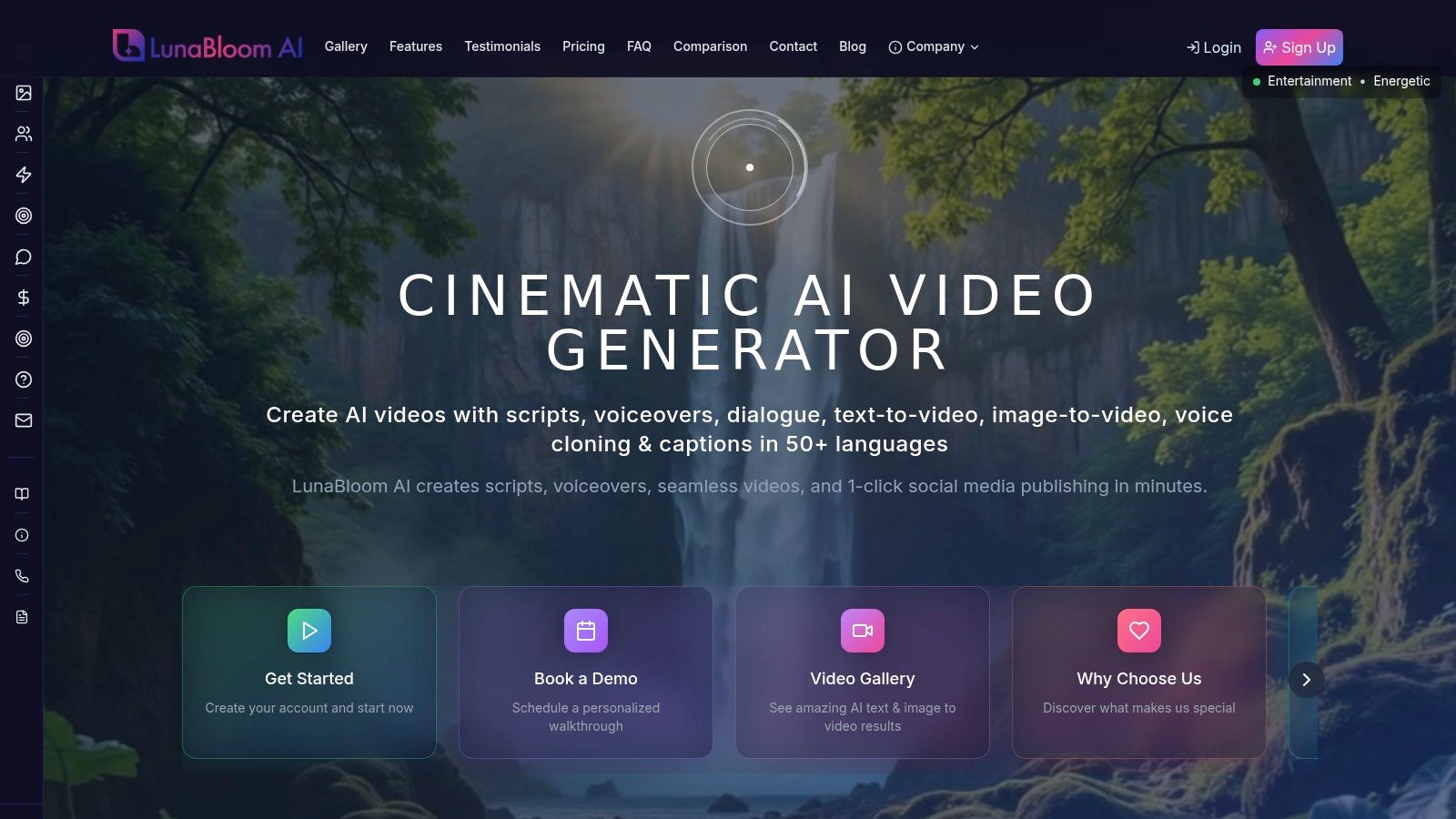
LunaBloom AI earns the top spot by offering a complete AI video creation studio with powerful, built-in voice cloning. It's more than just a voice tool; it's an end-to-end production platform for users who need professional results without a steep learning curve. The platform excels at turning simple text or images into studio-quality videos, making it perfect for marketers, educators, and content teams.
What truly makes LunaBloom AI the best voice cloning software is its all-in-one approach. You can create a digital copy of your voice and immediately use it across a full suite of video tools. This allows for consistent, on-brand content in multiple languages, complete with customizable AI avatars and automatic subtitles, all from one dashboard.
Key Features & Analysis
LunaBloom AI’s features are built for practical, real-world use, especially for teams focused on global reach and brand consistency.
- Integrated Voice Cloning: Voice cloning isn't a separate feature; it's deeply embedded in the video creation workflow. This lets you produce everything from social media shorts to complex training modules with a consistent brand voice.
- Extensive Language Support: With over 150 natural-sounding voices in 50+ languages, including regional accents, it’s a powerhouse for localization. Clone a voice once and apply it to content for different markets, keeping your brand's sound consistent worldwide.
- Full Production Suite: Beyond voice, the platform includes text-to-video, image-to-video, customizable AI avatars, and automated SEO metadata. This eliminates the need to juggle multiple software subscriptions.
- Team & Enterprise Tools: Features like version control, real-time playback for precise edits, and API access help LunaBloom AI fit directly into professional production pipelines, making it a scalable solution.
Practical Use Cases
- Marketing & Sales: Create localized product demos and sales pitches with a consistent brand voice for international markets.
- Corporate Training: Develop e-learning modules narrated by a familiar company leader or a standard brand voice, which can be updated easily without re-recording.
- Content Creators: Quickly produce narrated videos for YouTube or social media, maintaining vocal consistency even when creating content in bulk.
Pros & Cons
| Pros | Cons |
|---|---|
| All-in-One Platform: Combines voice cloning with a full suite of video production and workflow tools. | Complex Pricing: The mix of subscription tiers and pay-per-second charges can be confusing for new users. |
| Excellent for Localization: Superior multilingual support with over 50 languages and regional accents. | Gated Premium Features: Advanced voice cloning and analytics are locked behind higher-priced plans. |
| Scalable & Team-Friendly: API access and collaboration features support enterprise needs. | Learning Curve for Advanced Tools: While the basics are simple, mastering the full suite takes time. |
| High-Quality Output: Generates polished, professional-grade videos and audio with minimal technical skill. |
Final Verdict
LunaBloom AI is a fantastic choice for anyone serious about using AI voice technology in a broader content strategy. Its unique integration of high-fidelity voice cloning into a complete video platform provides unmatched value. While the pricing needs careful review, its robust features, scalability, and focus on localization make it a top-tier investment for professionals and businesses.
Website: https://lunabloomai.com
2. ElevenLabs
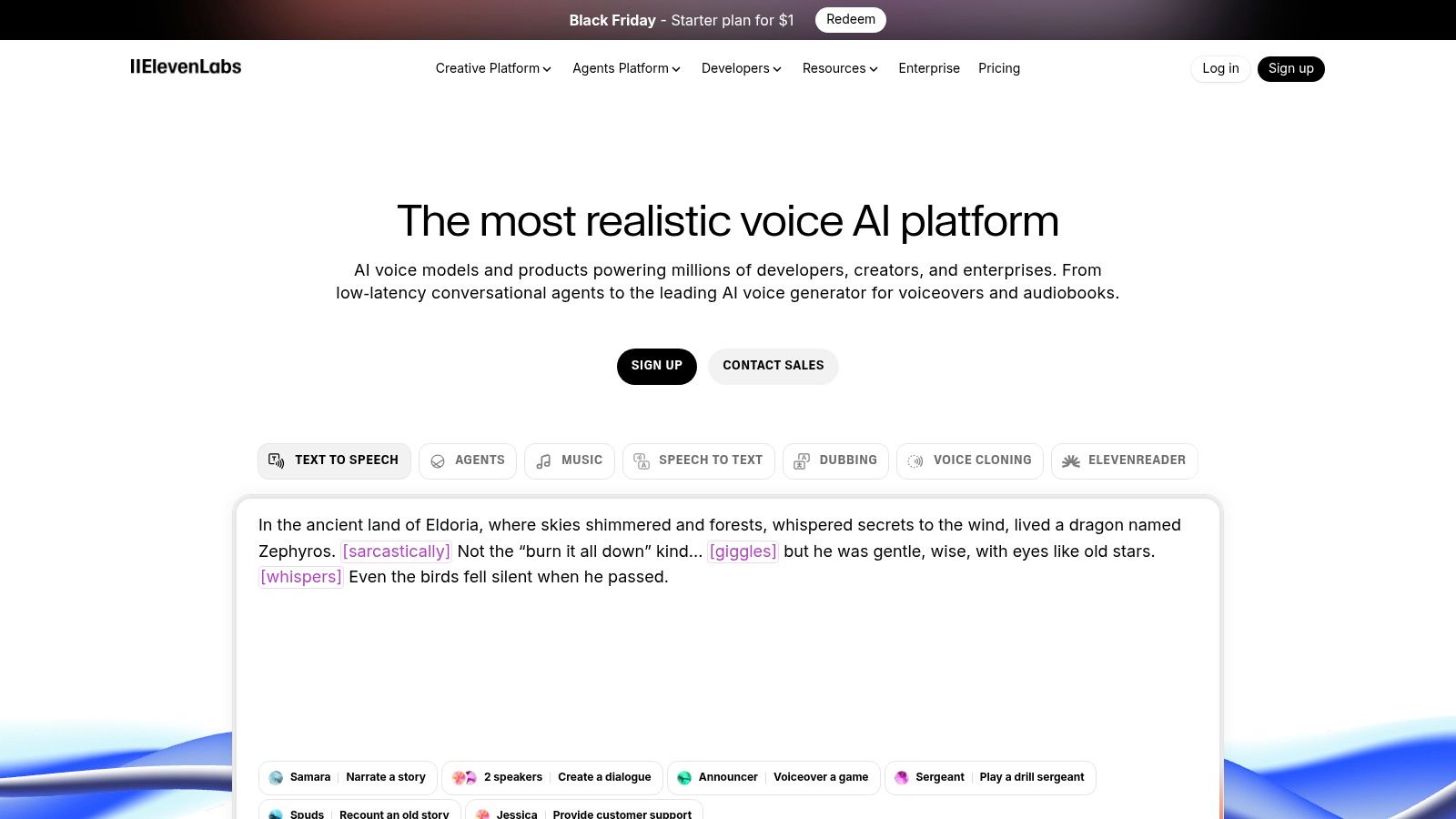
ElevenLabs has quickly set the standard for high-fidelity audio, making it one of the best voice cloning software options for those who demand extreme realism. The platform excels at generating voices that are rich, emotional, and nearly indistinguishable from human speech. It's designed for users who prioritize quality above all else, from audiobook narrators to marketing agencies.
The platform offers two main cloning methods: Instant Voice Cloning, which needs just a minute of audio for quick results, and Professional Voice Cloning (PVC) for a perfectly crafted, studio-grade replica. The latter is ideal for enterprise use where a consistent brand voice is essential.
Key Features & User Experience
ElevenLabs provides a full suite of tools built around its core text-to-speech engine. The Projects feature is great for long-form content like audiobooks, while the Dubbing studio can translate and re-voice videos in dozens of languages. Its robust API lets developers integrate its powerful voice generation into their own applications.
- Pricing Structure: Uses a credit-based system. The free tier offers 10,000 characters per month and lets you create 3 custom voices, but without a commercial license. Paid plans start at $5/month, with higher tiers offering Professional Voice Cloning and better audio quality.
- Best For: Podcasters, audiobook producers, marketing teams, and developers needing a scalable, API-driven solution with top-tier voice quality.
- Practical Tip: Use the "Voice Settings" sliders to fine-tune the cloned voice's emotional range and delivery, matching it perfectly to your content's tone.
Pros & Cons
| Pros | Cons |
|---|---|
| Industry-leading realism and emotional depth. | Credit system can be complex for high-volume users. |
| Scalable plans with a robust developer API. | Professional Voice Cloning is locked behind higher-tier plans. |
| Comprehensive toolset including dubbing and projects. | Requires careful audio sample selection for best results. |
Learn more at ElevenLabs.io
3. Descript (Overdub)
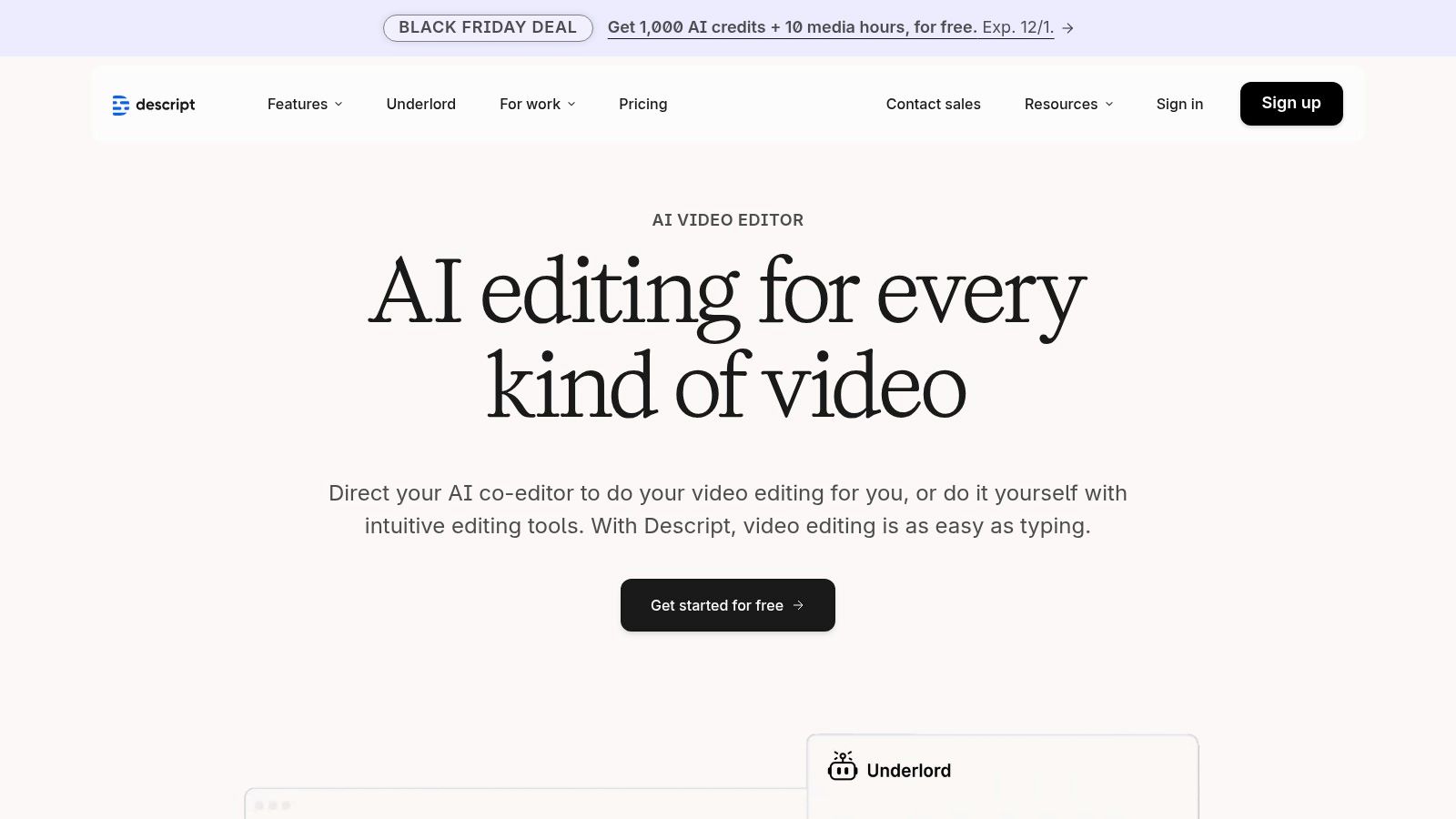
Descript carves out a unique niche by integrating voice cloning directly into an all-in-one audio and video editor. Its technology, called Overdub, is less about creating standalone voiceovers and more about streamlining your workflow. This makes it one of the best voice cloning software choices for podcasters and YouTubers who need to make quick corrections without re-recording entire segments.
The platform’s strength is its text-based editing interface. You upload your media, Descript transcribes it, and you edit the audio or video simply by editing the text. Overdub lets you type new words and have them spoken in your cloned voice, seamlessly patching them into the original recording.
Key Features & User Experience
Descript is built for creators who value efficiency. Beyond Overdub, it includes powerful tools like automatic filler-word removal ("um," "uh") and Studio Sound for enhancing audio quality. The voice cloning process requires submitting a voice ID and reading a 10-30 minute script to ensure consent and generate a high-quality model.
- Pricing Structure: A free plan includes one hour of transcription and limited Overdub use. Paid plans start at $15/month per user. The Pro plan ($30/month) is needed for an unlimited Overdub vocabulary, which is essential for most professional use cases.
- Best For: Podcasters, video editors, and corporate trainers who frequently need to correct or update existing recordings within a single app.
- Practical Tip: To get the best Overdub results, record your training data in the same environment and with the same microphone you normally use. Consistent recording conditions are key.
Pros & Cons
| Pros | Cons |
|---|---|
| Seamlessly integrated into a powerful editing workflow. | Less suited for API-first usage. |
| Excellent for correcting mistakes and patching audio. | Best cloning quality requires the top-tier Pro plan. |
| All-in-one solution for transcription, editing, and cloning. | Cloning is limited to your own voice for security. |
Learn more at Descript.com
4. Resemble AI
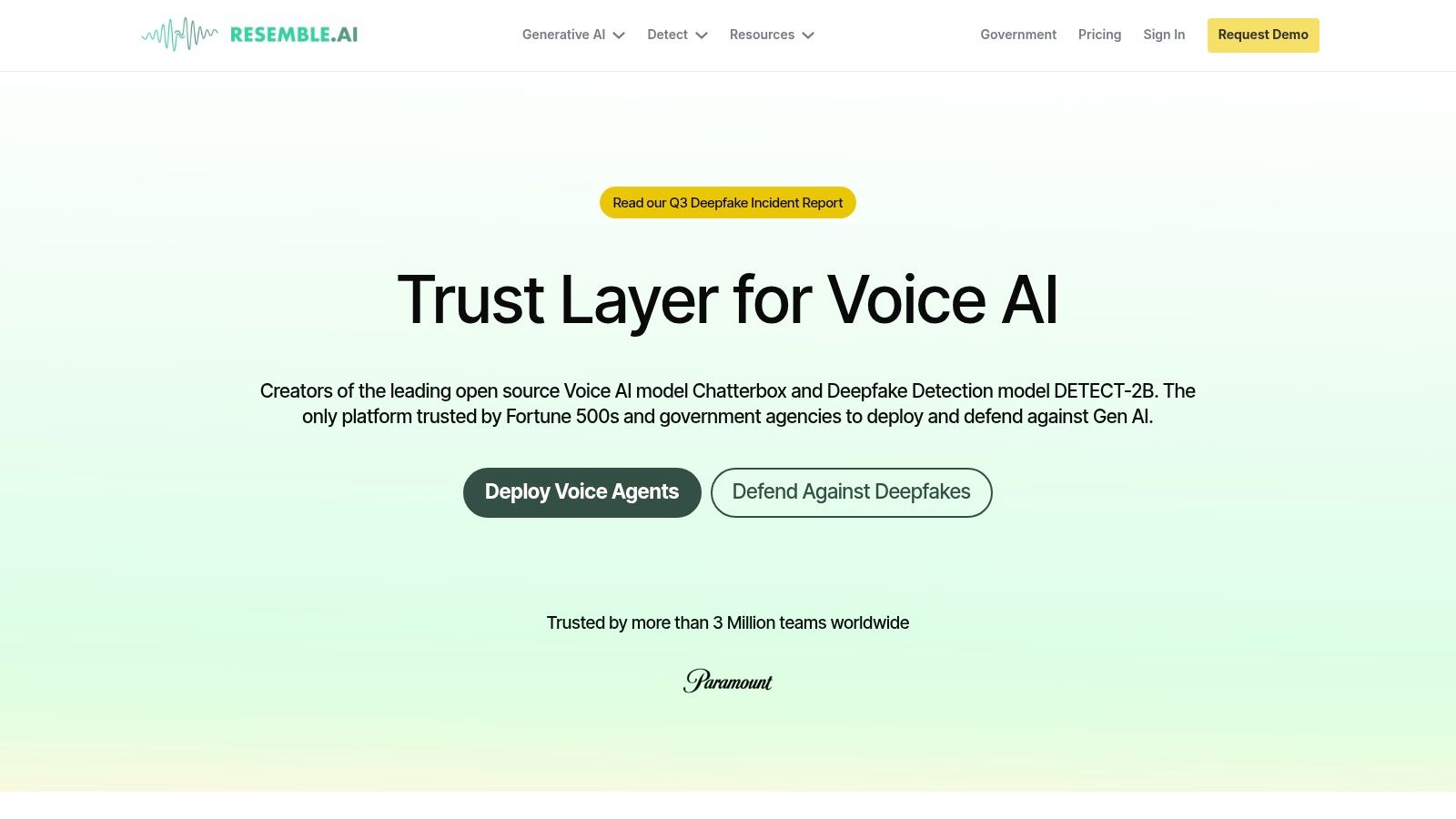
Resemble AI is a complete generative voice platform with a robust suite of tools for both individuals and large companies. It stands out by blending creative flexibility with strong security features, making it one of the best voice cloning software options for users who need a versatile and secure solution. The platform is designed for a wide range of uses, from dynamic in-game dialogue to personalized ad campaigns.
The platform offers multiple cloning options, including a "Rapid Voice Cloning" feature that needs only a few seconds of audio. For higher quality, users can upload more data to create a professional-grade clone. This flexibility allows teams to quickly prototype ideas while still having a path to a polished final product.
Key Features & User Experience
Resemble AI's features go beyond simple text-to-speech. It includes innovative tools like real-time speech-to-speech for transforming one voice into another, extensive emotion control, and a "Localize" feature for dubbing content into over 100 languages. Its powerful API is well-documented, and it offers deepfake detection tools to protect against misuse.
- Pricing Structure: Offers a Basic plan with pay-as-you-go pricing for custom voice cloning. The Pro plan is for professionals needing higher quality and API access. An Enterprise tier provides custom pricing, advanced security, and dedicated support.
- Best For: Game developers, enterprise teams, and creators who need a secure, API-first platform with advanced features like real-time voice conversion and deepfake detection.
- Practical Tip: Use the speech-to-speech feature to direct the cloned voice's performance. Record a line with your desired intonation, and the AI will replicate the performance style using the target cloned voice.
Pros & Cons
| Pros | Cons |
|---|---|
| Strong enterprise focus with security and detection tools. | Feature set can be complex for beginners. |
| Flexible plans for individuals, pros, and businesses. | Best quality and real-time features are limited to higher tiers. |
| Advanced speech-to-speech and localization features. | Pay-as-you-go model can become costly for high-volume cloning. |
Learn more at Resemble.ai
5. LOVO.ai (Genny)
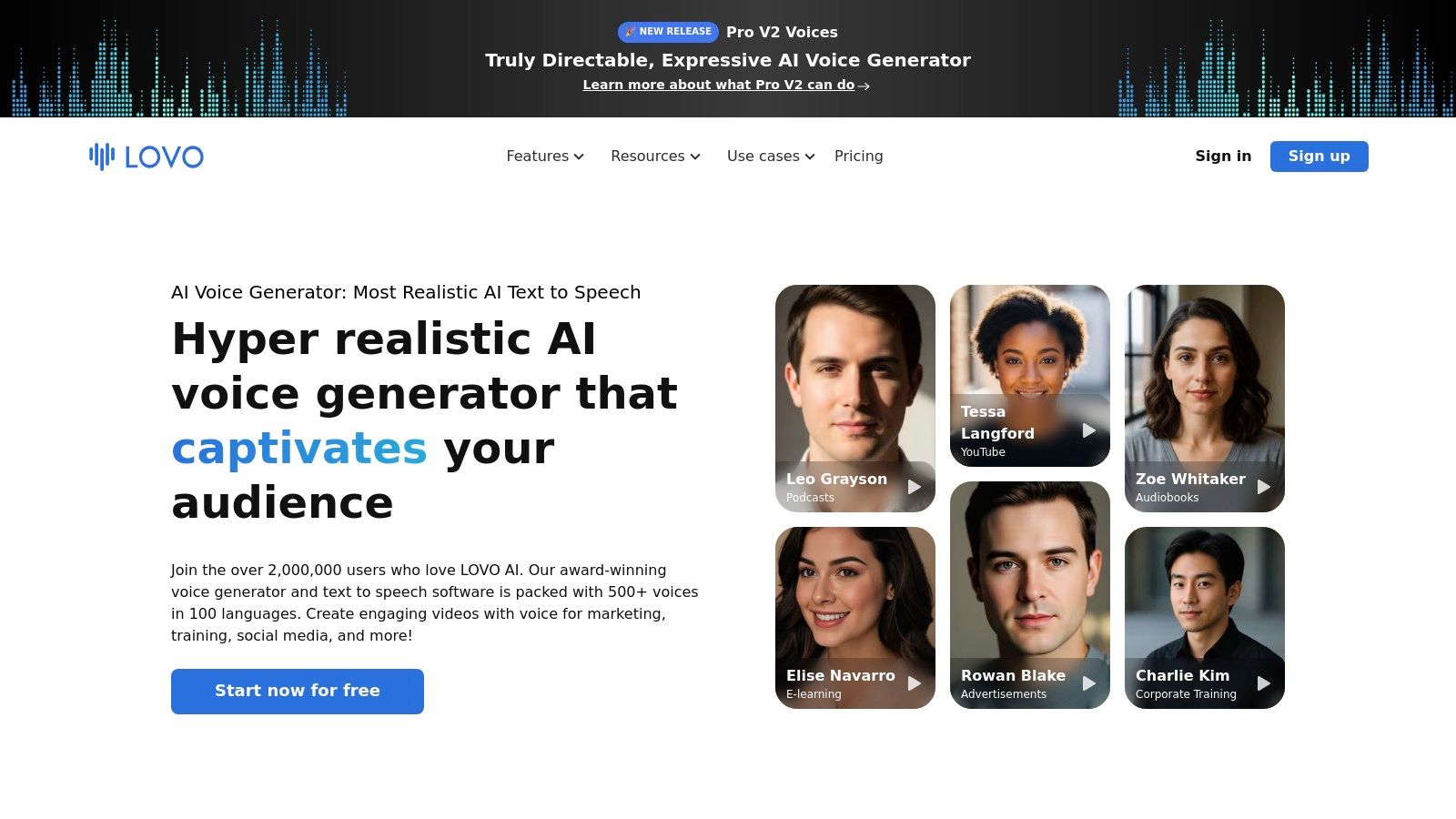
LOVO.ai is a strong contender for the best voice cloning software, especially for marketers and creators, thanks to its all-in-one platform. Its Genny studio offers a massive library of over 500 AI voices in more than 100 languages, providing incredible variety right out of the box. The platform is designed for users who want a versatile toolkit that combines voice generation with basic video editing.
LOVO's strength is its user-friendly interface and its rich, pre-made voice catalog, which includes highly realistic "Pro V2" voices. The cloning feature is part of a broader suite of tools aimed at streamlining the entire content creation workflow, from script to final video. This makes it an excellent choice for teams creating marketing materials, e-learning modules, and product demos.
Key Features & User Experience
Genny, LOVO's creation studio, is an intuitive environment where users can manage projects, generate voiceovers, and even add subtitles and stock imagery. Its comprehensive feature set appeals to users who want to avoid juggling multiple applications. The voice cloning process is straightforward, allowing users to create a digital replica of a voice with minimal technical know-how.
- Pricing Structure: Offers a free plan with limited features. Paid plans are based on hours of AI voice generation per month, starting with a Basic plan and scaling to Pro and Pro+ tiers. Higher-tier plans unlock more cloning slots and advanced features. Commercial rights are included with all paid plans.
- Best For: Marketing teams, corporate trainers, e-learning developers, and YouTubers who need a diverse voice library and an integrated workspace.
- Practical Tip: Experiment with the "Pro V2" voices before cloning your own. Their built-in emotional range might be sufficient for your needs, saving you time and credits.
Pros & Cons
| Pros | Cons |
|---|---|
| Huge library of 500+ high-quality voices. | Hour-based quotas can feel restrictive for high-volume users. |
| Commercial rights are included on all paid plans. | Pricing and feature sets can be complex. |
| User-friendly interface with team collaboration tools. | Cloning feature is less prominent than the pre-made voice library. |
Learn more at lovo.ai
6. Kits.ai
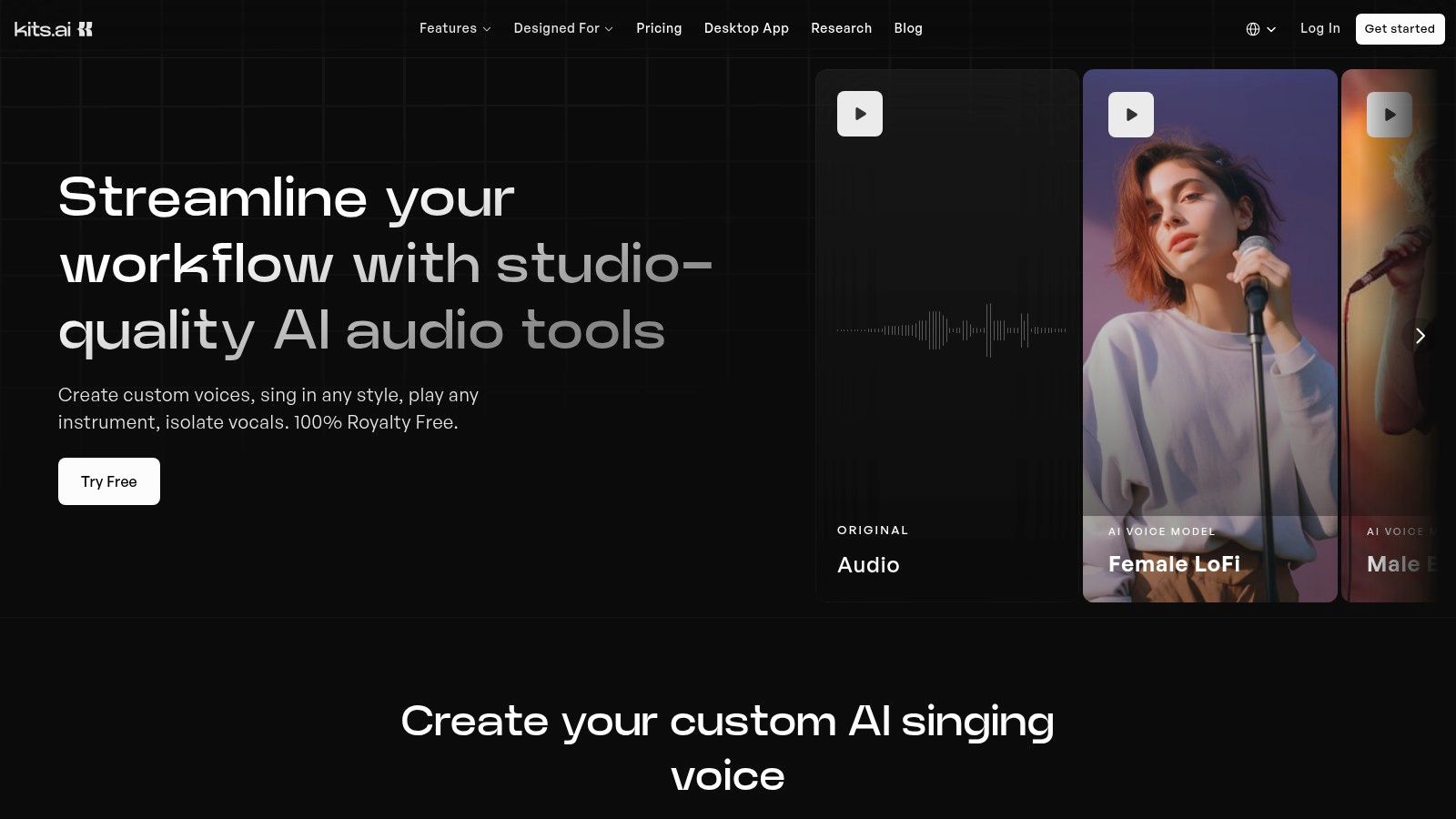
Kits.ai targets a unique niche, making it the best voice cloning software for musicians and music producers. Unlike platforms focused on spoken word, Kits.ai is engineered to handle the complexities of singing. It offers tools to create vocal lines, harmonies, and even entirely new singing voices. It's a creative playground for artists looking to experiment with vocal textures without needing a session singer.
The platform lets users clone their own singing voice or transform existing audio into different vocal styles using a library of licensed AI artist voices. This focus on musical application makes it an invaluable tool for producing demos, backing vocals, or generating unique vocal hooks.
Key Features & User Experience
Kits.ai offers a specialized suite of tools for music creation. Its core features include an AI singing voice synthesizer, a voice designer for blending different voices, and options for both instant and high-fidelity cloning. The user interface is straightforward, guiding users through the process of uploading audio and generating new vocal tracks quickly.
- Pricing Structure: Offers a free plan with limited access. Paid plans start at $9.99/month, providing more download minutes, additional voice slots for cloning, and access to premium artist voices. Higher-tier plans unlock advanced features.
- Best For: Music producers, singers, and songwriters who need to create custom vocals, harmonies, or experiment with different singing styles.
- Practical Tip: Use the Voice Blender tool to combine attributes from two different AI voices. This can help you create a truly unique vocal character that fits the specific mood of your track.
Pros & Cons
| Pros | Cons |
|---|---|
| Highly specialized for singing and music production. | Download minutes can be restrictive on lower-tier plans. |
| Unique creative tools like a voice blender. | Not ideal for spoken-word content like podcasts. |
| Fair-use model with unlimited conversions on paid plans. | Top-tier cloning quality is reserved for more expensive plans. |
Learn more at Kits.ai
7. Uberduck
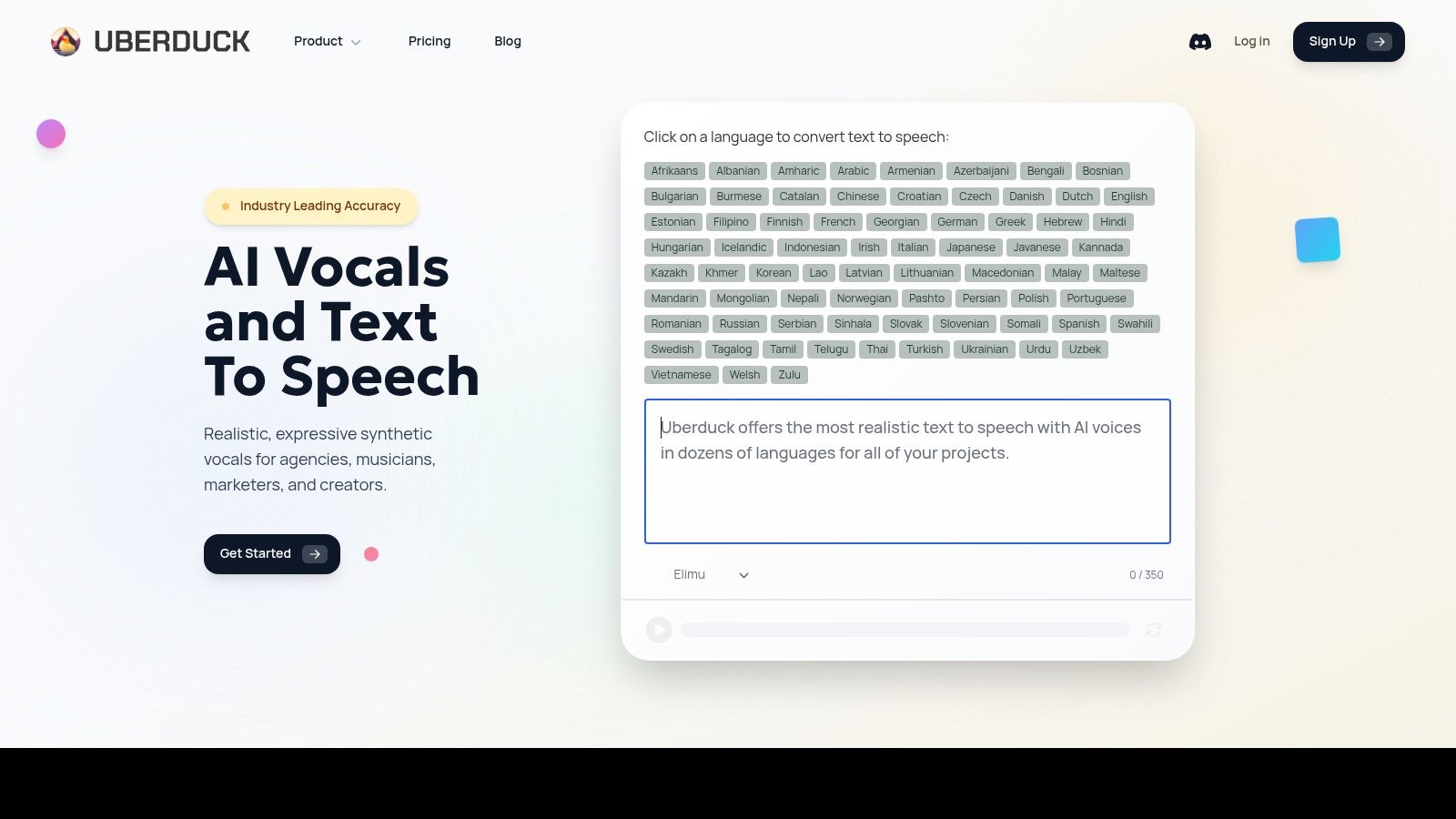
Uberduck is a playful yet powerful platform that blends text-to-speech with creative musical tools. It's a go-to for social media creators and musicians looking to experiment with AI raps, songs, and distinctive voiceovers. This makes it one of the best voice cloning software options for users who prioritize creative expression and rapid content generation.
The platform provides access to a vast library of voices and enables users to create their own private voice clones. This feature is particularly useful for creators wanting to maintain a unique audio identity across their content, from TikTok videos to podcast intros. The emphasis is on speed and accessibility, allowing for quick experimentation.
Key Features & User Experience
Uberduck’s interface is designed for creativity, featuring tools for both standard text-to-speech and specialized audio generation like AI rap. Its API access allows developers to integrate these unique voice and music capabilities directly into their own apps. The platform is built for fast turnarounds, which is ideal for social media content.
- Pricing Structure: Offers a free tier for personal use. Paid plans like the Creator plan (around $9.99/month) unlock commercial licensing, API access, and custom voice cloning. Enterprise plans are available for users needing the highest quality professional clones.
- Best For: Social media influencers, musicians, developers, and content creators looking for a fun, versatile tool for both voice and music generation.
- Practical Tip: When creating a voice clone, provide a high-quality, clean audio sample of at least 5-10 minutes with varied intonation to get the most expressive result.
Pros & Cons
| Pros | Cons |
|---|---|
| Unique focus on music and rap generation. | Enterprise plan is required for top-tier cloning quality. |
| Low entry price for commercial use on paid plans. | Credit system can become costly for high-volume generation. |
| Fast and ideal for social content experimentation. | Voice realism may not match specialized, high-fidelity platforms. |
Learn more at Uberduck.ai
8. Coqui Studio
Coqui Studio is a creative director’s tool, offering granular control over AI voice performance. It's built for creators who need to direct an AI voice's delivery with the same precision as a human actor, making it one of the best voice cloning software options for projects demanding specific emotional nuances. Instead of just generating speech, Coqui lets you manipulate intonation, pitch, and timing directly.
The platform offers unlimited English voice cloning on its paid plans, allowing users to create an entire cast of characters without extra fees. This focus on performance direction makes it ideal for animation studios, game developers, and producers of narrative-driven content who need a voice that can be dynamically sculpted to fit a scene.
Key Features & User Experience
Coqui Studio’s timeline editor is its standout feature, providing a visual interface to tweak and direct AI voice outputs sentence by sentence. This directable control allows for a level of artistic expression that many other platforms lack. The user experience is geared toward a hands-on creative process, encouraging experimentation.
- Pricing Structure: Offers a free trial with 30 minutes of generation time. Paid plans are based on a "starter hours" model, beginning at $42 for 5 hours of generation time per month. Higher tiers offer team collaboration, while Enterprise plans provide API access.
- Best For: Game developers, animators, and creative agencies that need fine-grained directorial control over voice-over performance and emotional delivery.
- Practical Tip: Use the timeline editor to add pauses or change the emphasis on specific words. This can dramatically alter the feel of a line and is key to achieving a natural performance.
Pros & Cons
| Pros | Cons |
|---|---|
| Unparalleled control over voice performance and delivery. | Pricing based on "hours" can be less intuitive. |
| Unlimited English voice cloning on paid tiers. | Broader language support is limited to higher-tier plans. |
| Straightforward pricing for smaller, project-based needs. | The learning curve is steeper for those wanting simple text-to-speech. |
Learn more at Coqui.ai
9. Replica Studios
Replica Studios is one of the best voice cloning software options specifically designed for game developers and filmmakers. Its platform is centered around a "Voice Lab" that allows users to design, blend, and direct AI character voices, providing a level of creative control essential for narrative-driven projects. This focus on performance makes it a go-to for studios looking to populate virtual worlds with believable dialogue.
The toolset is built to integrate directly into development workflows, offering plugins for popular game engines like Unreal and Unity. This allows for rapid prototyping and implementation of voice lines, streamlining the often-complex process of sourcing and directing voice actors.
Key Features & User Experience
Replica Studios offers a comprehensive suite for character voice creation, including text-to-speech, speech-to-speech, and the unique ability to blend existing AI voices to generate new personas. The user interface is straightforward, enabling creators to direct performances by adjusting pitch, emotion, and pacing to match specific scenes.
- Pricing Structure: A free plan offers 30 minutes of voice credit. Paid plans start at $24/month for 4 hours of credit, with higher "Pro" and "Pro+" tiers offering more credits, API access, and multi-user collaboration.
- Best For: Game developers, animation studios, and creators of virtual reality or other interactive narrative projects who need a scalable voice production pipeline.
- Practical Tip: Use the Voice Lab's blending feature to prototype unique character voices quickly. By combining attributes from different pre-made voices, you can establish a distinct vocal identity before committing to a final design.
Pros & Cons
| Pros | Cons |
|---|---|
| Tailored specifically for game and film workflows. | Credit system can be tricky to manage for large projects. |
| Voice Lab offers powerful character design tools. | Advanced features and API access are on higher-priced plans. |
| Clear pricing tiers for indie to enterprise users. | Less focused on general-purpose uses like marketing. |
Learn more at replicastudios.com
10. Microsoft Azure AI Speech (Custom Neural Voice)
For organizations where security and scalability are paramount, Microsoft's Azure AI Speech is a top-tier solution. While not a simple consumer tool, its Custom Neural Voice (CNV) feature provides enterprise-grade capabilities that make it one of the best voice cloning software options for large-scale deployments. It’s built for businesses needing to integrate a unique brand voice directly into their existing cloud infrastructure.
The platform's primary differentiator is its Responsible AI framework. Access to custom voice creation is gated through an application process, ensuring that the technology is used ethically. This makes it ideal for regulated industries or companies wanting to deploy voice technology with a strong governance posture.

Key Features & User Experience
Azure AI Speech is part of the broader Azure ecosystem, meaning it integrates seamlessly with other Microsoft cloud services. Users interact with it via the Speech Studio or its extensive APIs. The platform provides prebuilt neural voices, while the CNV process allows for training highly realistic, exclusive voices from user-provided audio data.
- Pricing Structure: Follows a complex, pay-as-you-go cloud model. Costs are broken down into training hours for the custom model and a per-character or per-hour rate for synthesis and hosting. This can be cost-effective for high-volume use but requires careful budget management.
- Best For: Enterprises and large organizations that need a highly scalable, secure, and compliant voice solution integrated within the Microsoft Azure cloud.
- Practical Tip: Before applying for Custom Neural Voice, ensure your use case aligns with Microsoft's Responsible AI principles and that you have a professionally recorded, high-quality dataset of at least 300 lines of audio.
Pros & Cons
| Pros | Cons |
|---|---|
| Strong compliance and responsible-AI guardrails. | Custom voice creation is restricted and requires approval. |
| Deep integration with the Azure ecosystem. | Pricing is complex; training and hosting are separate fees. |
| Enterprise-level support and service-level agreements (SLAs). | Steeper learning curve compared to standalone platforms. |
Learn more at Azure.Microsoft.com
11. Amazon Polly
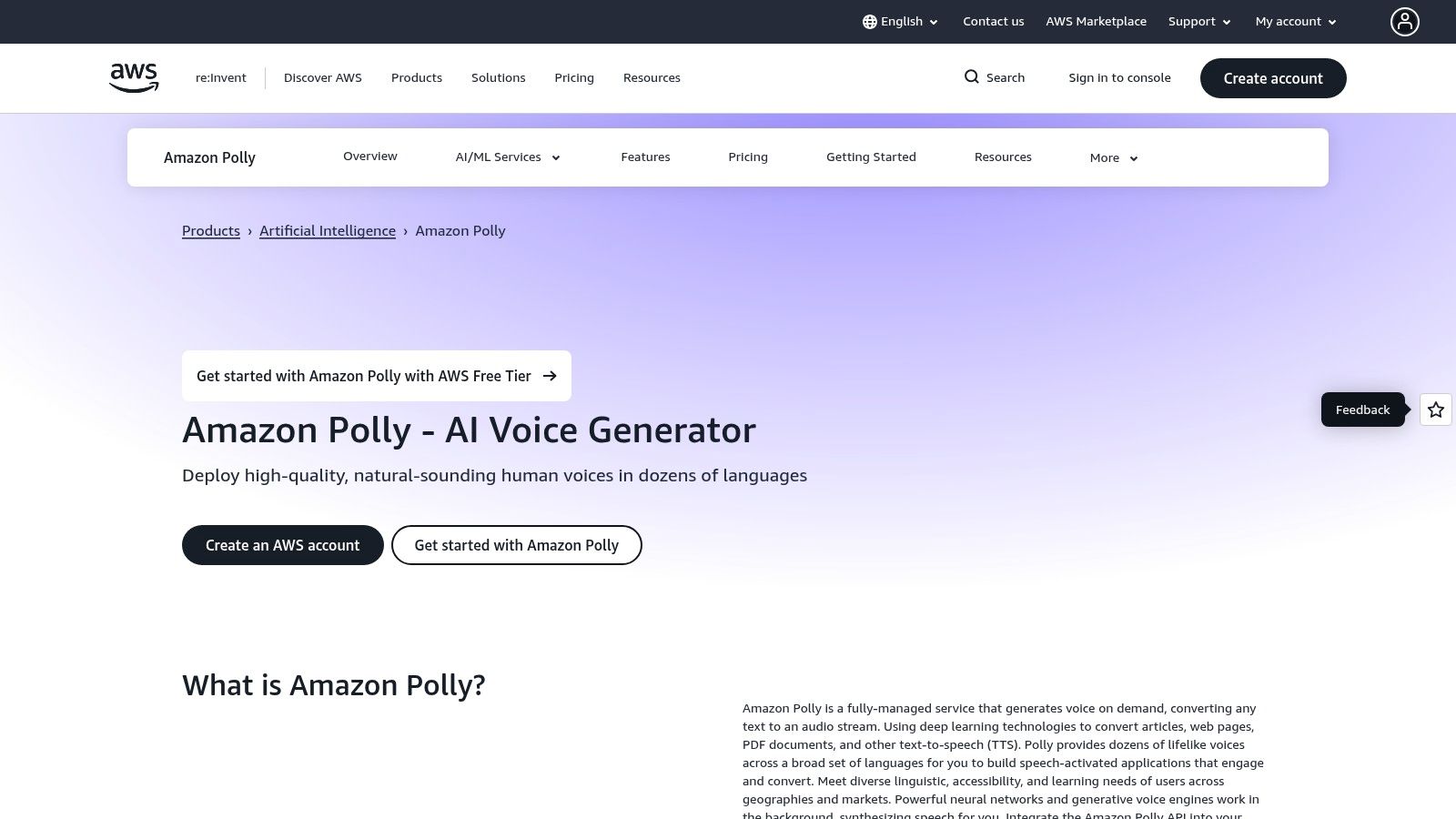
Amazon Polly is a developer-centric, cloud-based text-to-speech (TTS) service from Amazon Web Services (AWS). While not a one-click voice cloner for individuals, it offers a robust framework for enterprises to develop a unique Brand Voice. This makes it a critical tool for companies needing scalable, reliable, and globally distributed AI audio. Its strength lies in its deep integration with the AWS ecosystem.
Polly is designed for applications requiring high-throughput, low-latency speech synthesis, from call centers to audio versions of articles. The Brand Voice program is a bespoke service where businesses work with the Polly team to build an exclusive, high-quality neural TTS voice that embodies their brand identity.
Key Features & User Experience
Amazon Polly provides a library of over 100 voices across more than 40 languages. Developers can fine-tune outputs using Speech Synthesis Markup Language (SSML) for precise control over pronunciation and pacing. The service is managed through the AWS Management Console or integrated directly into applications using AWS SDKs.
- Pricing Structure: Polly operates on a pay-as-you-go basis, charging per million characters processed. A generous free tier includes millions of characters per month for the first year. The Brand Voice custom cloning is an enterprise-level service with separate, project-based pricing.
- Best For: Developers and businesses already invested in the AWS ecosystem that require a scalable, reliable TTS solution for their applications.
- Practical Tip: Leverage SSML tags extensively to control speech nuances. Use the
<phoneme>tag to specify custom pronunciations for jargon or branded terms, ensuring consistent audio output.
Pros & Cons
| Pros | Cons |
|---|---|
| Highly reliable global delivery and pay-as-you-go billing. | Self-serve voice cloning is not generally offered. |
| Easy integration via AWS SDKs and console. | Custom voices typically require enterprise engagement. |
| Extensive library of high-quality pre-built voices. | User interface is more technical and developer-focused. |
Learn more at aws.amazon.com/polly/
12. Google Cloud Text-to-Speech
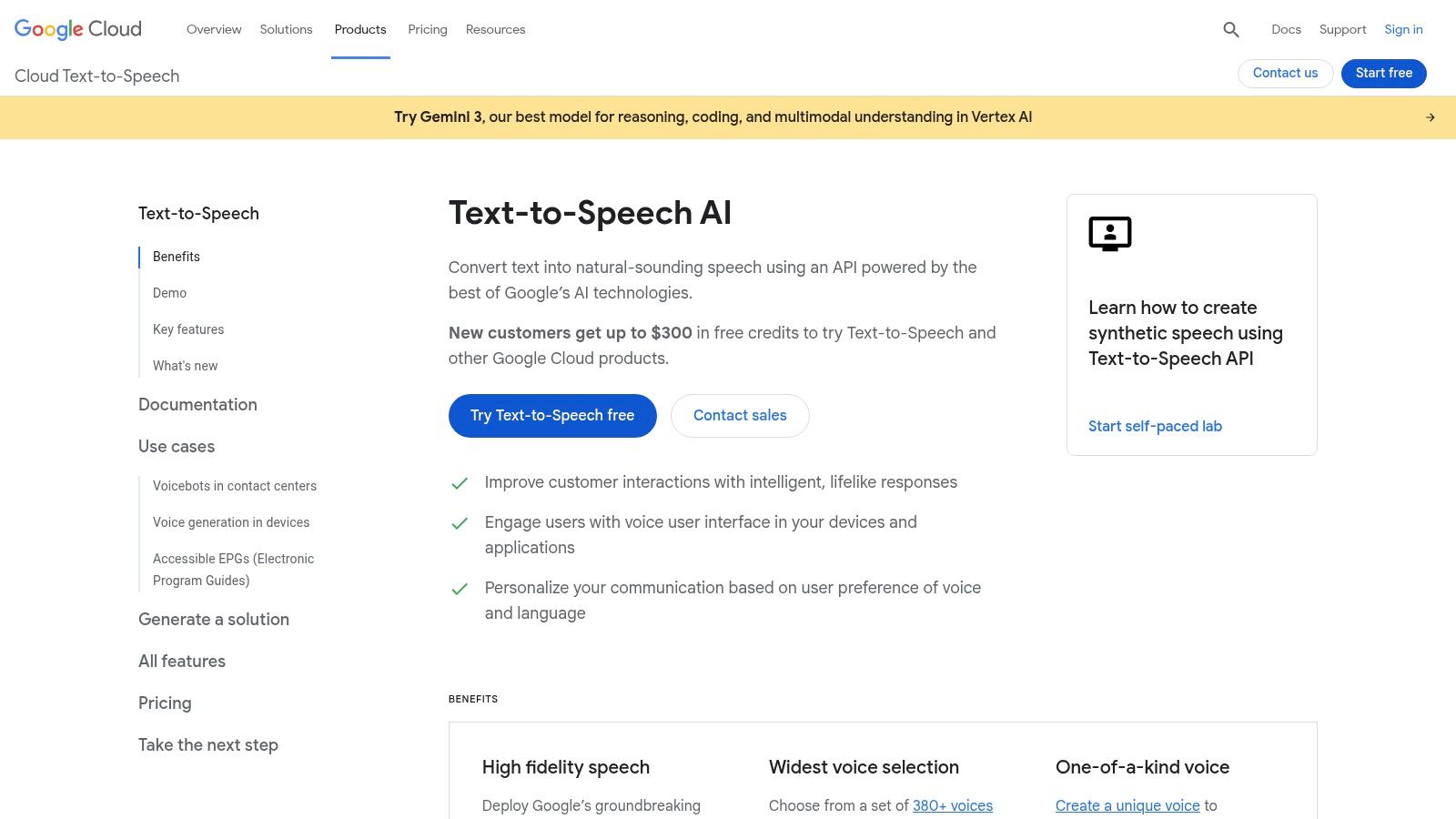
Leveraging Google's massive infrastructure, Google Cloud Text-to-Speech is one of the best voice cloning software options for developers and enterprises needing a highly scalable, API-driven solution. It’s built for integration, offering access to premium WaveNet and Neural2 voices that produce remarkably clear and natural-sounding speech across an extensive range of languages.
The platform's strength is its developer-centric tools and straightforward, pay-as-you-go pricing. While its legacy Custom Voice program is no longer onboarding new users, the "Instant Custom Voice" feature allows for the rapid creation of unique voices from audio samples. This is ideal for businesses wanting to quickly establish a distinct audio identity within their applications.
Key Features & User Experience
Google Cloud's TTS is less a standalone application and more a powerful component to be integrated into a larger system via its API. The user experience is tailored for developers, with extensive documentation and client libraries for various programming languages. This allows for powerful workflows, such as automatically generating audio files from text stored in Google Cloud Storage.
- Pricing Structure: The model is strictly pay-as-you-go, billed per million characters of text synthesized. A generous free tier is available. Premium voices like WaveNet and custom voice models incur higher per-character rates.
- Best For: Developers and businesses already invested in the Google Cloud ecosystem that require a scalable, API-first text-to-speech solution.
- Practical Tip: Use Speech Synthesis Markup Language (SSML) tags in your API requests to control specific aspects of speech, such as pronunciation, volume, and speaking rate, for more expressive audio output.
Pros & Cons
| Pros | Cons |
|---|---|
| Strong developer ecosystem and straightforward pricing. | Instant Custom Voice and advanced features carry higher rates. |
| Easy integration with other Google Cloud services. | More of a developer tool than a user-friendly creative platform. |
| Extensive language and voice selection with high-quality models. | Legacy Custom Voice program is not accepting new customers. |
Learn more at cloud.google.com/text-to-speech
Top 12 Voice-Cloning Software Comparison
| Product | Core features ✨ | Quality & UX ★ | Price & Value 💰 | Target & USP 👥 |
|---|---|---|---|---|
| LunaBloom AI 🏆 | ✨ Text→video, image→video, customizable AI avatars, voice cloning, 150+ voices, auto-subtitles (50+ langs), API | ★★★★★, fast studio-quality, real-time playback | 💰 Free trial + pay-as-you-go; Starter→Growth→Professional; affordable at entry | 👥 Creators, marketers, educators, teams — ✨End-to-end multilingual video workflows |
| ElevenLabs | Instant & pro voice cloning, high-fidelity TTS, dubbing, studio tools, developer API | ★★★★★, market-leading realism | 💰 Credit-based scalable pricing; Creator/Pro tiers for PVC | 👥 Creators & enterprises — ✨Industry-leading voice realism |
| Descript (Overdub) | Overdub voice cloning, text-based audio/video editor, transcription, 4K export | ★★★★☆, seamless editor-first workflow | 💰 Freemium → Pro; Overdub on paid plans | 👥 Podcasters & video editors — ✨Integrated editing + cloning |
| Resemble AI | Rapid & professional cloning, 149+ languages, speech-to-speech, real-time & API, anti-impersonation tools | ★★★★☆, enterprise-ready with security features | 💰 Flexible plans from creator→enterprise; SLAs available | 👥 Teams & enterprises — ✨Security/detection + multi-lang synthesis |
| LOVO.ai (Genny) | 500+ voices in 100+ langs, Pro V2 directable voices, cloning, subtitles, team features | ★★★★☆, easy onboarding, rich voice library | 💰 Tiered hour/quota model; commercial rights on paid plans | 👥 Marketers & e-learning creators — ✨Huge multilingual voice catalog |
| Kits.ai | Singing voice synthesis, voice designer/blender, instant/pro cloning, choir/harmony tools | ★★★★☆, music-focused creative UX | 💰 Voice slots + download-minute quotas; tiered plans | 👥 Musicians & producers — ✨Singing & vocal production tools |
| Uberduck | TTS + creative rap/music generation, private voices, API, commercial licensing | ★★★☆☆, fast prototyping for social content | 💰 Low entry; credit-based for high volume | 👥 Creators & social musicians — ✨Rapid creative experiments |
| Coqui Studio | Directable pacing, intonation & intensity control, unlimited English cloning (paid), team/enterprise options | ★★★★☆, fine-grained performance control | 💰 Hour-block pricing; Pro & Enterprise tiers | 👥 Voice directors & small teams — ✨Performance-level voice direction |
| Replica Studios | Voice Lab for character design/blending, TTS, speech-to-speech, game/film plugins | ★★★★☆, tailored for interactive media | 💰 Starter→Pro; project-based Pro+ options | 👥 Game & film developers — ✨Character voice lab & plugins |
| Microsoft Azure AI Speech (Custom Neural Voice) | Prebuilt neural voices, Custom Neural Voice (approval), enterprise tooling & SLAs | ★★★★☆, enterprise-grade, strong compliance | 💰 Complex enterprise pricing; training/hosting fees | 👥 Large enterprises & regulated orgs — ✨Governance, SLAs & global scale |
| Amazon Polly | 100+ voices in 40+ langs, SSML, lexicons, Brand Voice program, AWS integration | ★★★★☆, reliable global delivery | 💰 Pay-as-you-go (AWS); enterprise Brand Voice process | 👥 Developers & enterprises — ✨Scalable AWS-native TTS |
| Google Cloud Text-to-Speech | WaveNet/Neural2 voices, Instant Custom Voice, API, per-character billing | ★★★★☆, strong dev tooling & latency | 💰 Per-character pricing; GCP integration | 👥 Developers & cloud customers — ✨Instant Custom Voice + GCP ecosystem |
Final Thoughts
Navigating the world of the best voice cloning software feels like a glimpse into the future of content. As we've seen, the technology has grown from a niche novelty into a powerful, accessible tool for creators, marketers, and businesses of all sizes. The journey from text to lifelike speech is no longer a complex process but a streamlined workflow available through platforms like LunaBloom AI, ElevenLabs, and Descript.
The key takeaway is that the "best" software isn't a one-size-fits-all solution. Your ideal tool depends entirely on your goals, technical comfort, and budget. The market offers a wide spectrum of options, from enterprise-grade platforms like Microsoft Azure that provide unparalleled scalability for developers, to creator-focused tools like Kits.ai that excel in musical and expressive applications.
Making the Right Choice: A Practical Framework
To turn this review into action, consider these final decision-making factors. This framework will help you move from analysis to implementation with confidence.
1. Prioritize Your Primary Use Case:
- For Marketing & Branding: You need high-quality, emotionally resonant clones for ad campaigns and brand videos. Tools like LunaBloom AI and ElevenLabs are top contenders, offering premium quality and fine-tuned emotional controls.
- For E-Learning & Corporate Training: Clarity, consistency, and scalability are crucial. You'll need a platform that can handle large volumes of text and supports multiple languages. Resemble AI and LOVO.ai offer robust features tailored for these needs.
- For Podcasting & Content Creation: Efficiency and realism are key. The ability to quickly edit audio by changing text, as offered by Descript's Overdub, is a game-changer for quick fixes and updates.
- For Development & API Integration: If you're building an application, you need a powerful, reliable API. Microsoft Azure AI Speech, Google Cloud TTS, and Amazon Polly are the industry standards, providing extensive documentation and scalable infrastructure.
2. Evaluate the Fidelity-to-Effort Ratio:
How much effort are you willing to invest for a perfect clone? Some platforms create a decent clone from just a minute of audio, which is great for quick projects. However, achieving a truly indistinguishable voice often requires more high-quality training data and a platform designed for precision, like LunaBloom AI. Decide if "good enough" works for you or if you require broadcast-quality perfection.
3. Don't Overlook the Ethical and Legal Implications:
This is non-negotiable. Before committing to any service, review its terms regarding voice ownership and acceptable use. Ensure you have explicit consent from any individual whose voice you plan to clone. The best voice cloning software platforms have clear ethical guidelines, but the ultimate responsibility lies with you. Protect yourself, your brand, and your voice talent by adhering to ethical best practices.
The world of AI voice synthesis is dynamic and exciting. The tools covered today represent the pinnacle of what's possible, empowering you to create more engaging and personalized content than ever before. By carefully aligning your needs with the unique strengths of each platform, you can unlock a new dimension of creative potential and connect with your audience on a profoundly human level, using a voice that is authentically yours.
Ready to experience the next generation of voice cloning firsthand? LunaBloom AI combines unparalleled realism with an intuitive workflow, making it the ideal choice for creators and marketers who demand the highest quality. Explore our features and create your first hyper-realistic voice clone today by visiting LunaBloom AI.