Ever wonder how to make your videos speak to the whole world? The answer is a video translation app. This isn't just about adding subtitles; it's a powerful tool that uses artificial intelligence (AI) to automatically translate your video's audio and text into different languages.
Think of it as your personal, all-in-one localization team. It can handle everything from generating perfectly synced subtitles and creating natural-sounding audio dubs to even cloning your voice for an authentic feel in any language.
Why Do You Need a Video Translation App?
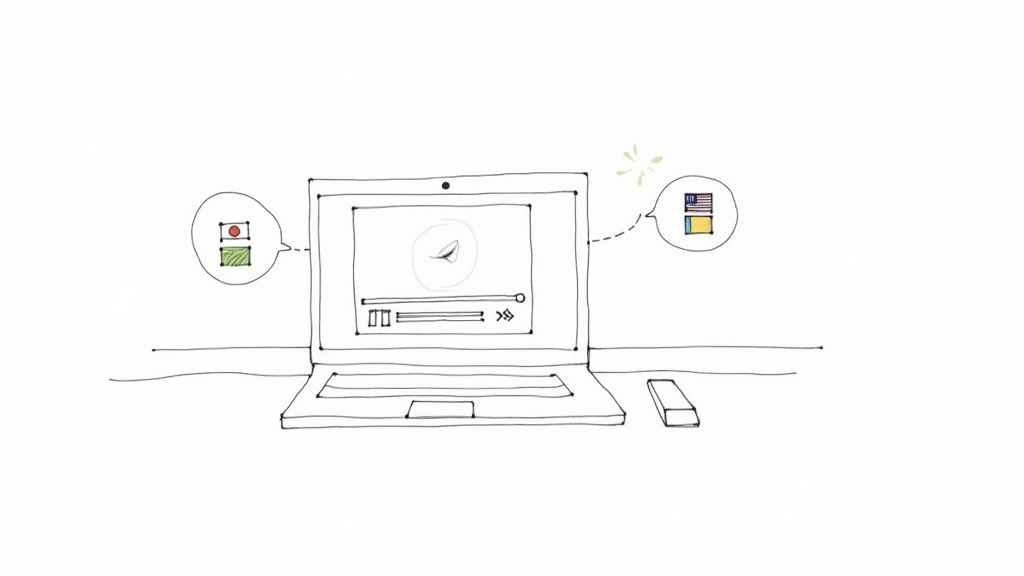
The goal of a video translation app is simple: to break down language barriers. In the past, translating a single video was a huge project. It required hiring human translators, voice actors, and video editors—a process that was slow, expensive, and complicated.
Today, AI-powered tools automate this entire workflow. They make global content creation fast, affordable, and accessible to everyone, from solo content creators to large corporations.
But it’s not just about swapping words. A top-tier video translation app preserves the original meaning, tone, and context of your message. This ensures your content connects genuinely with viewers, no matter where they live or what language they speak.
The Growing Demand for Multilingual Video
The world is hungry for content it can understand. Whether you're a business, educator, or social media influencer, reaching a global audience is no longer optional—it's essential for growth.
The numbers don't lie. The AI video translation market, valued at USD 2.68 billion in 2024, is projected to soar to USD 33.4 billion by 2034. That's a massive compound annual growth rate of 28.7%. As detailed in AI video translation market reports, this explosive growth shows just how crucial these tools have become.
What Can These Apps Actually Do?
So, what are the key functions of a modern video translation app? They go far beyond simple text replacement.
- Automatic Subtitle Generation: The app listens to your video’s audio, transcribes it, and creates perfectly timed subtitles. You can then translate them into dozens of languages instantly.
- AI Voice Dubbing: Forget robotic, unnatural voiceovers. Modern apps generate human-like audio in other languages, often matching the gender and tone of the original speaker for a seamless experience.
- Voice Cloning: This is where things get truly futuristic. Advanced apps can analyze and replicate the original speaker's voice, delivering the translated script in a synthetic voice that sounds nearly identical. This maintains brand consistency and a personal touch across all languages.
Core Features Powering Modern Translation Apps
To understand what makes a video translation app so powerful, we need to look at its core features. These aren't just separate tools; they're integrated AI systems designed to handle complex creative tasks, making it easier than ever to connect with a worldwide audience.
The foundation of every great app is AI-driven transcription. It’s the engine that converts your speech into text, setting the stage for everything else.
Automated Subtitle and Caption Generation
First and foremost, a video translation app must excel at creating subtitles. The AI transcribes every spoken word and perfectly syncs the text to your video’s timeline, saving you hours of manual work.
Once you have the original transcript, translating it is as easy as selecting a language from a list. This feature is a game-changer for accessibility, opening your content to viewers who are deaf or hard of hearing. It also caters to the 85% of social media users who watch videos with the sound off.
Knowing the best ways to add subtitles to short videos is crucial for engagement, and these apps automate the entire process.
Key benefits include:
- Speed and Efficiency: Generate accurate subtitles for a long video in minutes, not days.
- Improved SEO: Search engines can index the text in your subtitles, boosting your video's visibility in search results.
- Enhanced Viewer Comprehension: Subtitles reinforce your message, making it easier for viewers to follow along and retain information.
AI Voice Dubbing and Realistic Cloning
Subtitles are just the beginning. The real innovation lies in AI-powered audio translation, also known as dubbing. Instead of hiring expensive voice actors for each language, the app generates a new, translated audio track for you. While early versions sounded robotic, today’s AI voices are incredibly natural and expressive.
The most exciting advancement is AI voice cloning. This feature analyzes the unique characteristics of a speaker's voice—including pitch, pace, and tone—and uses that vocal profile to speak the translated script.
The result? A dubbed video where it sounds like the original speaker is fluently speaking another language. This maintains brand identity and forges a powerful, authentic connection with the new audience.
Imagine a CEO recording a single product announcement in English. With a voice cloning app, that same message can be delivered in Spanish, French, and Japanese, all in a voice that is recognizably hers. It builds trust and feels far more personal than a generic voiceover ever could.
This capability is a massive leap forward. It ensures your content's personality and authority are never lost in translation.
How Translation Apps Unlock Global Reach
Understanding the features is great, but seeing how a video translation app works in the real world is where its value truly shines. These are practical tools that open doors to new markets, audiences, and opportunities.
From international marketing campaigns to global e-learning courses, these apps are transforming how we communicate. They provide a clear path from a single local video to a powerful global message.
Driving Results in Marketing and Advertising
Imagine a marketing team launching a new ad campaign. In the past, creating versions for five different countries meant hiring five separate teams of translators, voice actors, and editors. The costs and timelines would quickly escalate.
Today, that same team can produce one high-quality video and use a translation app to localize it for global markets in just minutes.
The app generates accurate subtitles and dubs the audio with a cloned voice, ensuring the company spokesperson sounds just as authentic in Spanish as they do in Japanese or German. This isn't just about saving money; it's about speed. It enables agile campaigns that can be tested and launched worldwide almost instantly, providing a huge competitive advantage.
Streamlining Corporate Training and Education
How do you train a global workforce without creating dozens of separate videos? A single training module can now be understood by employees in every office, from Paris to São Paulo.
This approach delivers consistent, high-quality training to everyone, regardless of their location or native language. Here's how it works:
- A single source video is created to standardize the core message.
- The app generates multilingual subtitles to support different learning styles and meet accessibility requirements.
- AI dubbing provides localized audio, making complex topics easier for non-native speakers to understand and remember.
This centralized method saves significant resources and helps build a more unified and inclusive company culture. Educators are using the same strategy to make their lectures accessible to students worldwide, removing geographical barriers to learning.
The demand for this type of localization is growing fast. The global localization industry, valued at USD 71.7 billion in 2024, is expected to reach USD 75.7 billion in 2025. You can explore this trend further in this recent industry analysis.
Expanding Reach for Social Media Creators
For content creators, a video translation app is a direct line to an international fanbase. A YouTuber can publish a video for their local audience, then add subtitles in a dozen languages with just a few clicks.
This simple action can multiply a video's reach overnight, attracting new subscribers and unlocking monetization opportunities in previously untapped markets. Suddenly, a local creator has the power to become a global influencer.
How to Choose the Right Video Translation App
Selecting the right video translation app is crucial. The best tool will streamline your workflow and accelerate your growth, while the wrong one will only create frustration. The market is crowded, so knowing what to look for is key to making a smart decision that aligns with your goals.
Your primary focus should be on translation quality. Don't settle for a tool that just gets most of the words right. You need one that understands context, preserves tone, and respects cultural nuances. A top-tier app delivers translations that feel human, not machine-generated.
Evaluate Translation Accuracy and Nuance
Accuracy is the foundation of effective translation. An app that produces awkward subtitles or clunky dubs can damage your brand's credibility. Look for platforms built on modern neural machine translation (NMT) models, as they are far superior at understanding context than older systems.
Here’s what to look for:
- Contextual Understanding: Does the app correctly interpret idioms, slang, and industry-specific terminology? Test it with a few tricky phrases from your own content.
- Tone Preservation: The AI should match the original speaker's emotional tone, whether it's energetic, serious, or humorous. A flat, robotic voiceover is an instant turn-off.
- Human Review Options: No automated translation is perfect. The best tools provide an easy-to-use editor for reviewing and refining the AI's output. This final quality check is non-negotiable.
Assess Language Support and Voice Quality
While a long list of supported languages looks impressive, quality is more important than quantity. An app that offers flawless translation in 20 key languages is far more valuable than one providing mediocre results in 100. Ensure the languages crucial to your target markets are supported with high-quality voices.
And speaking of voices, listen closely to the AI-generated audio. Does it sound natural, or does it have an artificial, tinny quality? The best platforms today offer incredibly realistic voices and even voice cloning.
A high-quality AI voice should be nearly indistinguishable from a human voice actor. This maintains a professional feel and ensures a positive viewing experience for your new audience.
Prioritize a Smooth User Experience
The most powerful tool is useless if it’s difficult to use. A clean, intuitive interface saves you time and allows you to focus on creating great content instead of fighting with the software. Look for a tool with a logical workflow, clear instructions, and an uncluttered design.
A great user experience also means seamless integration. Can you easily upload videos from various sources? Does the app export files in the formats you need? If you're looking for a platform that balances powerful features with a simple interface, consider a solution like LunaBloom AI. It serves as a great benchmark for what a modern video translation app should offer.
Finally, don't overlook customer support. When you're on a deadline and encounter an issue, responsive and helpful support is a lifesaver. Before committing, check what kind of tutorials, FAQs, and human support the platform provides.
Your Step-by-Step Video Translation Workflow
Translating your first video might seem daunting, but modern apps have simplified the process into a clear, straightforward workflow. It's designed to be intuitive, even if you've never done it before.
The process begins the moment you upload your video. Most apps are flexible, allowing you to upload files directly or import content from platforms like YouTube or cloud storage services. This is where the AI gets to work.
Stage 1: Upload and Language Selection
Once your video is in the system, it's time to choose your target languages. A good video translation app will present a simple menu where you can select multiple languages at once.
If you already have a transcript, uploading it at this stage can significantly improve the accuracy of the initial translation.
Stage 2: AI-Powered Generation
With your languages selected, the AI takes over. It transcribes the audio, creates time-synced subtitles, and generates the first draft of the dubbed or voice-cloned audio tracks. This entire process, which once took days, is now completed in minutes.
This incredible speed is made possible by foundational technologies. For example, tools like Google Translate now handle over 1 billion translations daily, and its widely available API empowers developers to offer this level of automation.
Stage 3: Human Review and Refinement
This is where you ensure top quality. No AI is perfect; it can miss subtle cultural nuances, idioms, or your company’s specific terminology. That's why any high-quality video translation app includes an editor where you can review and polish the AI's work.
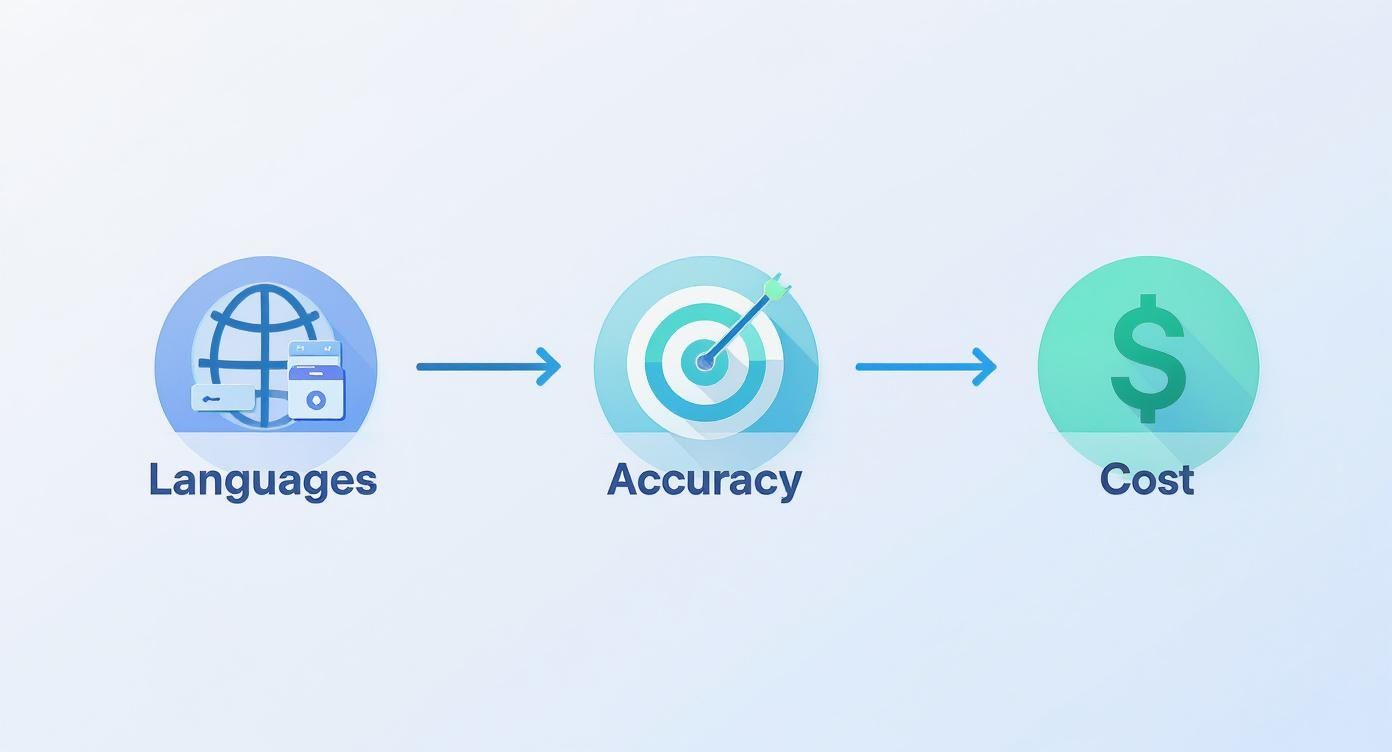
As the diagram illustrates, a smart workflow balances your language choices, accuracy standards, and budget to achieve the best possible result.
In this stage, you or a native speaker can:
- Correct grammatical errors to maintain a professional standard.
- Adjust phrasing for a more natural, local feel.
- Fine-tune subtitle timing for perfect synchronization.
This human-in-the-loop approach combines the speed of AI with the precision of human oversight. The goal isn’t just translation; it’s true localization.
Stage 4: Export and Distribution
Once you approve the final version, you're ready to share. Simply export your newly multilingual video. The app will package everything—the translated subtitles and new audio tracks—into a clean file ready for distribution. Now you can confidently share your content with different regions, knowing your message will resonate.
Frequently Asked Questions
As you start exploring video translation, you'll likely have some questions. We've compiled the most common ones here to provide clear, straightforward answers and help you feel confident using a video translation app.
How Accurate Is AI Video Translation?
This is the most common question, and for good reason. The accuracy of AI translation has improved dramatically in recent years, thanks to advanced neural machine translation (NMT) models.
For common language pairs, such as English to Spanish, a good app can achieve over 95% accuracy on the first pass. However, accuracy involves more than just correct words; it's also about capturing context, tone, and cultural nuances.
AI is excellent at literal translation but can sometimes struggle with:
- Idiomatic Expressions: Phrases like "break a leg" don't make sense when translated literally.
- Industry-Specific Jargon: The AI may need help with technical terms or company-specific acronyms.
- Cultural Context: A joke that is funny in one culture might be confusing or offensive in another.
For this reason, a final review by a human is always recommended. Let the AI handle 95% of the work, and then have a person add that final 5% of polish for a perfect result.
How Do Apps Handle Idioms and Slang?
Translating informal language is a significant challenge, but modern AI is getting much better at it by learning from vast datasets of real-world conversations.
A top-tier video translation app won't just translate "it's raining cats and dogs" literally. Instead, it will find a culturally appropriate equivalent, like the Spanish phrase "está lloviendo a cántaros" (it's raining jugs).
Context is key. The more dialogue the AI has to analyze, the better it becomes at interpreting your intended meaning. Still, a quick check by a native speaker is the best way to ensure your slang sounds natural.
Is My Video Data Secure When Using an App?
Data security is a valid and important concern. Any reputable video translation app will use strong security measures to protect your files, including encrypting your data during upload and storage.
Before uploading content, always review the platform’s privacy policy. Look for clear information about data ownership, usage policies, and security protocols. Many companies address these concerns transparently on their websites, such as on Soreel's FAQ page.
Choose a provider that is upfront about how they protect your content. After all, it’s your valuable intellectual property.
Ready to break down language barriers and connect with a global audience? LunaBloom AI provides all the tools you need—from accurate AI subtitles and voice cloning to a simple, intuitive workflow—to make multilingual video creation effortless. Start creating your first translated video today!