Video isn’t just a part of the marketing landscape anymore; it is the landscape. With attention spans shorter than ever and competition at an all-time high, just hitting “record” isn’t enough. To truly capture your audience and see real results in 2026, you need to follow proven, modern techniques that demand attention from the very first frame.
A winning video strategy requires more than just a camera; it demands a brilliant plan and a deep understanding of what makes people stop scrolling.
This guide cuts straight to the chase. We’re diving into eight powerful video marketing best practices that you can put into action right away. You’ll learn how to hook viewers in the crucial first few seconds, make your videos easy to find, and turn casual watchers into loyal customers.
Let’s dive in!
Best 8 Video Marketing Best Practices (2026)
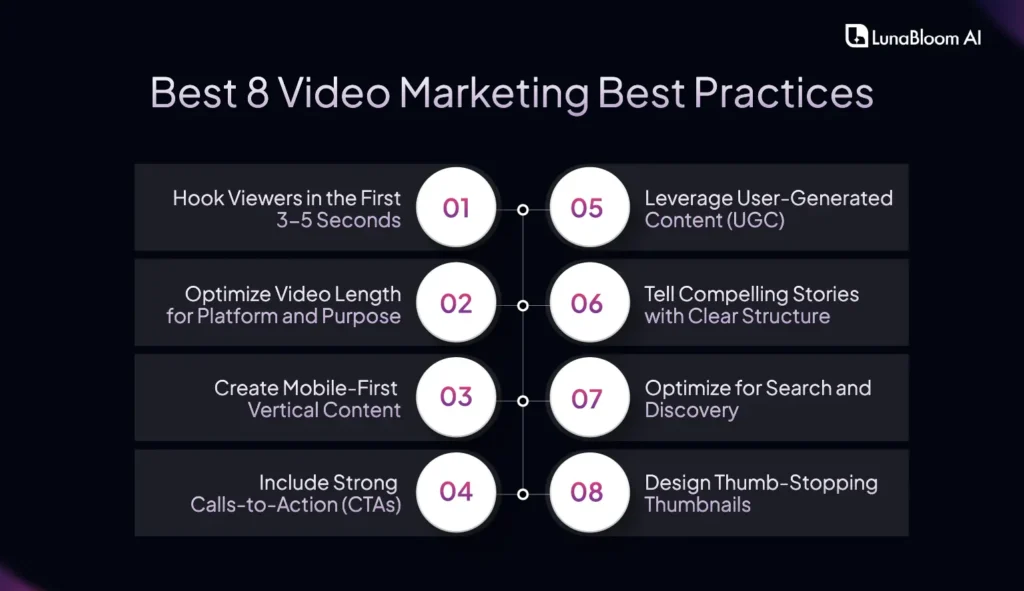
1. Hook Viewers in the First 3-5 Seconds
In today’s fast-scrolling world, you have a tiny window to make an impression. The single most important of all video marketing best practices is grabbing your viewer’s attention within the first 3 to 5 seconds.
This “hook” is the make-or-break moment that decides whether someone stays to watch or keeps on scrolling. Your goal is to instantly signal value, spark curiosity, or trigger an emotion that makes them stop in their tracks.
How to Implement an Effective Hook?
- Start with the “Wow” Moment: Don’t save your most impressive visual or surprising result for the end. Show a sneak peek of the final product or the most dramatic moment right away. BuzzFeed’s Tasty videos nail this by showing the delicious final dish before the recipe even starts.
- Create a Curiosity Gap: Pose a question or present a problem that the viewer will want to see solved. A text overlay that says, “This common mistake is costing you thousands,” immediately makes the audience want to know what the mistake is.
2. Optimize Video Length for Platform and Purpose
There’s no magic number for the perfect video length. What works on one platform will bomb on another. A critical video marketing best practice is to tailor your video’s duration to the platform, user expectations, and your content’s goal.
A 15-minute deep-dive tutorial is excellent for your dedicated YouTube audience, but it would be a total failure as an Instagram Reel meant for quick, casual viewing. You can also use a AI video creation tool to reduce workload.
How to Determine the Right Video Length?
- Short-Form for Awareness (Under 60 seconds): On TikTok, Instagram Reels, and YouTube Shorts, keep it between 15-60 seconds. This is perfect for grabbing attention, sharing quick tips, or jumping on trends to boost brand awareness.
- Mid-Form for Consideration (2-5 minutes): For Facebook and LinkedIn, videos in the 2 to 5-minute range work well. Use this length for product demos, customer testimonials, or short explainers that build trust.
3. Create Mobile-First Vertical Content
The majority of your audience is watching on their phones. As a result, creating mobile-first vertical content has become a non-negotiable best practice in video marketing.
This means designing videos specifically for a vertical screen (a 9:16 aspect ratio), which is the natural way people hold their phones.
How to Implement Mobile-First Vertical Video
- Shoot in Vertical Format: The best way to create great vertical video is to film it vertically. Turn your camera or smartphone sideways to record in a 9:16 aspect ratio from the beginning. This ensures your entire frame is used effectively.
- Frame for the Center: Keep the most essential action, subjects, and visuals in the center third of the screen. This “safe zone” ensures that platform overlays such as usernames, captions, or buttons don’t cover your key content.
4. Include Strong Calls-to-Action (CTAs)
A great video can entertain and inform, but its job isn’t done until you tell the viewer what to do next. Including a strong call-to-action (CTA) is one of the most fundamental best practices in video marketing.
A CTA is an explicit, direct instruction that guides the viewer to take a specific action, turning them from a passive watcher into an active lead or customer. Moreover create videos with AI to save your time.
How to Implement Effective CTAs
- Be Direct and Action-Oriented: Use strong verbs that create a sense of urgency. Instead of “Our guide is available,” say “Download your free guide now.” Words like “discover,” “start,” or “join” are more potent than generic phrases.
- Combine Visual and Verbal Cues: Reinforce your CTA in multiple ways. Have the host say, “Click the link in our bio to shop,” while on-screen text and a visual arrow point to the correct destination. This multi-sensory approach boosts response rates.
5. Leverage User-Generated Content (UGC)
In a world where everyone is skeptical of advertising, authenticity is your superpower. One of the most effective video marketing best practices is leveraging user-generated content (UGC).
This means incorporating authentic videos created by your customers and fans into your marketing. UGC swaps polished, corporate videos for genuine stories from real people, building incredible trust and social proof.
How to Implement UGC in Your Video Strategy
- Create a Submission Framework: Don’t just wait for content to appear. Launch campaigns with a branded hashtag, like Starbucks’ #RedCupContest, or create a dedicated submission portal on your website. This makes it easy for users to share and for you to track.
- Establish Clear Usage Rights: Always obtain explicit permission before using someone’s content. Create a simple terms-and-conditions agreement that users accept when they submit their video. This protects both you and the creator.
6. Tell Compelling Stories with Clear Structure
People don’t remember facts and features; they remember stories. One of the most timeless video marketing best practices is to wrap your message in a compelling narrative.
Stories create emotional connections, make complex information easy to digest, and ensure your brand is memorable. A well-structured story turns a passive viewer into an engaged fan who is invested in the outcome.
How to Implement a Storytelling Framework
- Start with a Relatable Character: Introduce a character (or customer persona) facing a challenge your audience understands. This creates instant empathy. Dove’s “Real Beauty” campaigns are so effective because they feature real women, making their stories instantly relatable.
- Create Emotional Peaks and Valleys: A great story isn’t flat. Build tension, introduce moments of struggle and hope, and lead to a climax. The famous John Lewis Christmas ads are masters of this, taking viewers on an emotional rollercoaster that ends in a heartwarming resolution.
7. Optimize for Search and Discovery
Making a great video is only half the job; you also have to make sure people can find it. Optimizing your content for search is one of the most crucial best practices in video marketing. Utilize the power of AI video generation it will provide the best results.
This means strategically using keywords, titles, descriptions, and tags to help search engines like Google and platform algorithms on YouTube and TikTok understand your video and show it to the right audience.
How to Implement Search Optimization
- Conduct Keyword Research: Use tools like YouTube’s search bar suggestions or other keyword software to find what your audience is searching for. Look for terms with a good amount of search volume but not too much competition.
- Write Compelling Titles and Descriptions: Put your main keyword in your video title and near the beginning of your description. Your title should be engaging and clear, while the description should provide more context, include related keywords, and add relevant links.
8. Design Thumb-Stopping Thumbnails
Before anyone hears a single word of your video, they see its thumbnail. This small image is your video’s billboard, and mastering it is one of the most powerful video marketing best practices.
A “thumb-stopping” thumbnail is a visually compelling graphic designed to grab attention and make someone click, literally stopping their thumb from scrolling past. It’s the single most significant factor influencing your video’s click-through rate (CTR).
How to Implement Thumb-Stopping Thumbnails
- Use Bright, Contrasting Colors: Your thumbnail needs to pop. Use a vibrant color palette with high contrast between the background and the main subject to immediately draw the eye. Avoid dark or muted tones that blend in.
- Include Expressive Human Faces: Our brains are wired to notice faces and read emotions. A close-up of a face showing a clear emotion—like shock, joy, or confusion creates an instant connection and makes people want to know the story behind it.
LunaBloom AI: Perfect Tool For Quick AI Video Creation
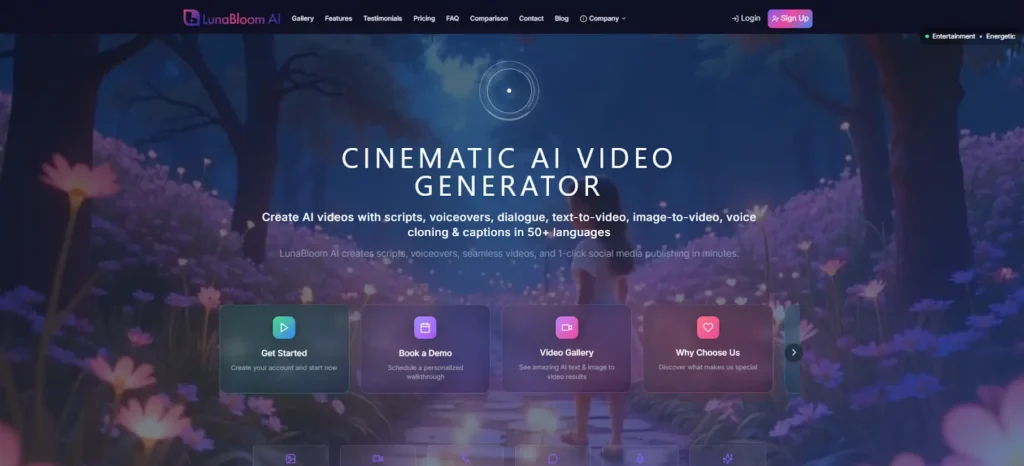
As AI technology continues to evolve, LunabloomAI is at the forefront of revolutionizing AI video creation. Their innovative features are designed to make video production simpler, faster, and more efficient than ever before.
Let’s take a closer look at what LunabloomAI has to offer:
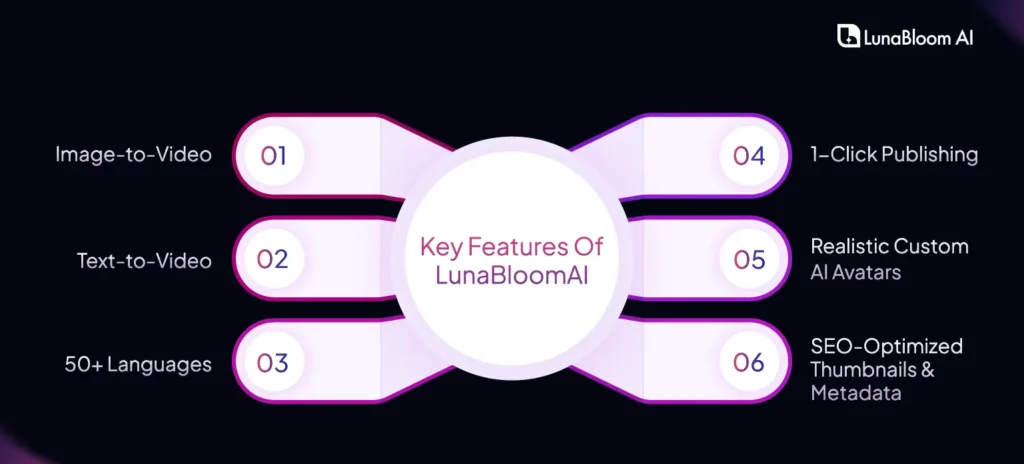
- Image-to-Video: Transform static images into dynamic, engaging videos in just a few clicks. Whether you’re showcasing a product or telling a brand story, LunabloomAI’s image-to-video feature brings your visuals to life. Perfect for social media, ads, or explainer videos.
- Text-to-Video: No script? No problem. With LunabloomAI’s text-to-video feature, you can turn any written content into engaging videos within minutes. Simply input your text, and let the AI handle the video creation, adding animations ready to be shared.
- 50+ Languages: Global reach is at your fingertips. LunabloomAI supports over 50 languages, ensuring your videos are accessible to audiences worldwide. Whether you are expanding into new markets or targeting multilingual regions, the platform ensures your content speaks the language of your audience.
- 1-Click Publishing: Publishing video content should be as simple as creating it. With LunabloomAI’s 1-click publishing, you can instantly push your videos to your YouTube Channel. Spend less time on distribution and more time creating and engaging with your audience.
- Realistic Custom AI Avatars: Looking to take personalization to the next level? LunabloomAI’s custom AI avatars allow you to create lifelike virtual presenters or characters that can speak your scripts in a natural, engaging manner.
- SEO-Optimized Thumbnails & Metadata: Stand out in search results with SEO-optimized thumbnails and metadata. LunabloomAI automatically generates thumbnails and tags for your videos, making them more discoverable and improving your content’s performance on platforms like YouTube.

Your Actionable Next Steps
Feeling overwhelmed? Don’t try to do everything at once. Pick two or three practices that solve your biggest problems right now. If your videos aren’t driving sales, focus on stronger CTAs (Practice #4) and A/B testing your thumbnails (Practice #8).
Ready to streamline your production and scale your content creation without sacrificing quality? LunaBloom AI empowers you to generate professional, engaging videos in minutes, allowing you to focus on strategy and storytelling while our AI handles the heavy lifting.
Start implementing these best practices at scale and bring your vision to life effortlessly with LunaBloom AI.
FAQ Section
1. What are the top video marketing best practices for 2026?
Top video marketing best practices for 2026 include creating short-form content, personalizing videos for your audience, optimizing for mobile devices, leveraging AI tools like LunaBloom for efficient video creation, and incorporating clear CTAs to drive engagement.
2. How can LunaBloom AI help with video marketing in 2026?
LunaBloom AI simplifies video creation by turning text into professional videos quickly, offering easy customization options, and ensuring your videos are optimized for various platforms. It’s a powerful tool for marketers looking to enhance their video content strategy without the hassle of complex editing.
3. Why is video length important in 2026 video marketing?
Short-form videos (under 2 minutes) are essential in 2026 as they capture attention quickly, especially on mobile platforms and social media, where users prefer fast, engaging content that gets to the point.
4. How does AI streamline video creation in 2026?
AI tools like LunaBloom AI can automate many aspects of video production, from generating visuals to adding voiceovers, which allows marketers and businesses to produce high-quality videos efficiently without requiring extensive technical skills.
5. How can I add strong CTAs in my video content?
Incorporating CTAs in your videos is crucial for driving actions. Make them clear and action-oriented, such as “Sign Up Today” or “Watch More,” and place them at key points in your videos to guide viewers towards the next step.