Imagine your message reaching millions more people in their own language, all without the painful costs of hiring translation agencies and voice actors. That’s the simple promise of a modern video translation application—a tool built to tear down language barriers and connect you with a global audience instantly.
This guide breaks down everything you need to know about these game-changing tools. We'll explore how they work, what features to look for, and how you can use them to expand your reach.
Go Global Without Breaking The Bank
For years, taking your video content international was a logistical nightmare. The process was slow, wildly expensive, and meant juggling multiple vendors for transcription, translation, and voice-overs. This friction kept countless valuable messages trapped in a single language, seriously limiting their potential impact.
AI-powered tools have completely flipped the script. Think of a modern video translation application as your personal, on-demand localization team, ready to go 24/7. It handles the entire workflow automatically—from generating accurate subtitles to creating natural-sounding voice-overs in dozens of languages, all inside one convenient platform.
Why is Translated Content So Important Now?
Audiences everywhere are consuming more video than ever, and they overwhelmingly prefer it in their native language. Consider the global film translation market, which is booming—it jumped from $2,182.92 million in 2021 to a projected $2,889.06 million by 2025. This growth makes one thing crystal clear: the demand for easy-to-use translation tools is massive.
The benefits of using this technology are compelling:
- Slash Costs: Forget hefty bills for professional translators, voice actors, and studio time. AI makes it affordable.
- Launch Faster: Translate and launch video campaigns in multiple regions in a fraction of the traditional time.
- Expand Your Reach: Effortlessly connect with new international markets, opening up new engagement and revenue streams.
- Scale Your Content: Localize your entire video library, not just a few high-priority videos.
Ultimately, using a video translation application is about working smarter, not harder. It empowers you to build a truly global brand without the logistical headaches of the past. To see these features in action, check out the powerful tools offered by LunaBloom AI.
How AI Magically Translates Your Videos
Ever wondered how an app can take your English video and make it perfectly understandable to an audience in Japan or Spain? It’s not a single piece of tech doing all the heavy lifting. Instead, it’s a finely tuned orchestra of specialized AI models working together in harmony.
Think of it as a digital assembly line for your content. Each step is handled by an expert AI that completes its task before passing the project to the next. This layered approach is the key to creating a final product that feels natural and professional, not robotic.
This graphic shows just how much simpler the process becomes when creators can sidestep the usual localization headaches with a single, streamlined app.
As you can see, a powerful application replaces a messy web of expensive, disconnected workflows, giving you a straight shot to a global audience.
The Four Core AI Processes
At its heart, the entire translation process boils down to four critical automated stages. Each one builds on the last, taking your original video and preparing it for a brand-new audience.
-
Speech-to-Text Transcription: The first AI on the line is like a world-class stenographer. It listens closely to every word spoken in your video and transcribes it into a clean, written script with incredible accuracy. This text becomes the raw material for everything that follows.
-
Machine Translation Engine: Next, a powerful translation AI takes that script. This model is fluent in dozens of languages and instantly converts the text into your target language, paying close attention to grammar, nuance, and cultural context. If you want to dive deeper into how this tech is changing the game, check out these AI-Driven Workflows for Global Video Reach.
-
Subtitle and Caption Generation: With the translated script ready, another AI steps in to handle timing. It syncs the new text to the video's audio and on-screen action, making sure the subtitles appear at just the right moment for a seamless viewing experience.
-
AI Dubbing and Voice Cloning: This is where the real magic happens. A different AI generates a completely new audio track in the translated language. The most advanced platforms take this a step further with voice cloning, where the AI analyzes the original speaker’s unique vocal patterns—like pitch, tone, and rhythm—and recreates them in the new language.
The combination of these AI technologies is what makes modern video translation so powerful.
Core AI Technologies in Video Translation
Here’s a summary of the key AI-driven processes that make automatic video translation possible and their primary benefits for content creators.
| AI Technology | What It Does | Key Benefit |
|---|---|---|
| Speech-to-Text (STT) | Listens to the original audio and converts spoken words into a written transcript. | Creates an accurate text foundation for translation, eliminating manual transcription. |
| Machine Translation (MT) | Translates the transcribed text from the source language to the target language. | Provides instant, scalable translation across dozens of languages without human translators. |
| Subtitle Generation | Syncs the translated text with the video's timeline to create time-coded captions. | Ensures viewers can easily follow along, improving accessibility and engagement. |
| AI Dubbing & Voice Cloning | Generates a new voiceover in the target language, often mimicking the original speaker's tone. | Delivers an authentic and immersive viewing experience that feels native to the audience. |
This multi-layered process ensures the final product is more than just a translation—it's a true localization that preserves the creator's original intent.
This layered approach is what makes modern video translation so effective. It’s not just about swapping words; it’s about preserving the original intent and emotion of the speaker, creating an authentic viewing experience for any audience.
The result is a video that feels like it was made specifically for that new audience. Curious to see how easy it can be? You can get a feel for these capabilities yourself with the LunaBloom AI starter app.
Choosing Your Video Translation Application
With so many tools popping up, picking the right one can feel overwhelming. A great video translation application does more than just swap out words—it should be a complete toolkit that makes your content feel right at home, no matter who's watching. You're looking for that sweet spot: a platform with powerful features that’s still simple enough for anyone to use.
The goal is to find an app that handles the heavy lifting without cutting corners on quality. That means focusing on the things that actually matter for the final video, from how accurate the translation is to how authentic the new voice sounds.
A Checklist for Selecting the Best Tool
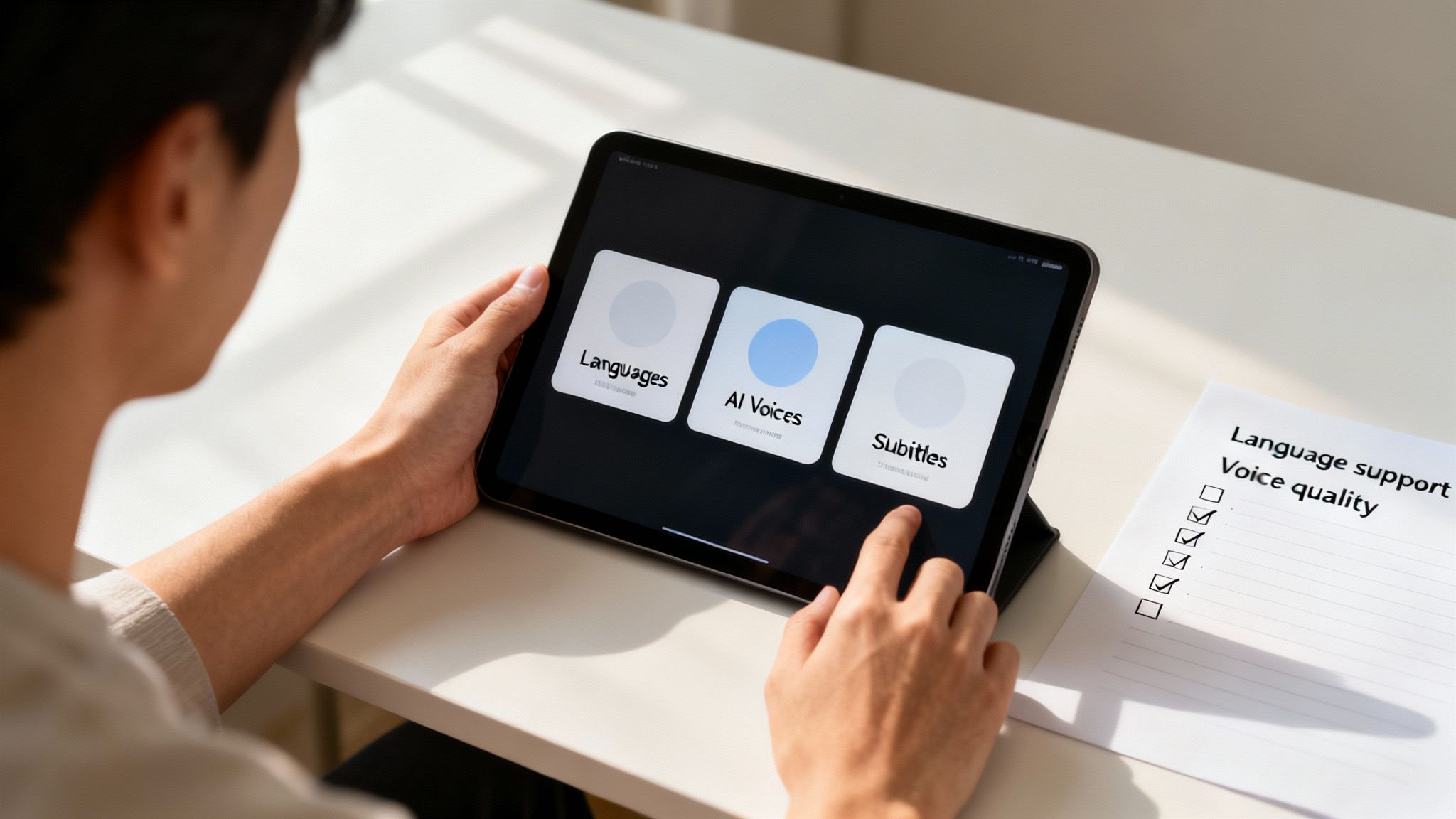
To cut through the noise, here are the non-negotiable features every top-tier video translation app should have. Each one is critical for producing professional videos that connect with viewers around the world.
-
Extensive Language Support: Does the tool speak your audience's language? Look for an app that offers a wide range of languages and dialects to ensure you're reaching the right people.
-
High-Quality AI Voices and Cloning: Listen to the voice options. Do they sound natural and engaging, or are they flat and robotic? The best platforms offer a library of realistic voices and, even better, voice cloning to preserve the original speaker’s unique tone.
-
Customizable Subtitle Options: Your subtitles are part of your brand. A solid application lets you control the fonts, colors, and positioning to keep your videos looking consistent and professional.
-
Intuitive User Interface (UI): You shouldn't need a film degree to figure it out. The platform should be dead simple, with a clear process that lets you upload, translate, and export videos without any headaches.
The market for these tools is exploding. The machine translation market alone is set to skyrocket from $1.1 billion in 2022 to an incredible $23.53 billion by 2032, thanks to AI that's getting scarily good—often rivaling human accuracy. This boom is great for creators, as it slashes the costs that used to come with manual translation work.
Why Each Feature Matters
These aren’t just nice-to-have extras; they’re essential for creating a viewing experience that feels authentic. High-quality voices keep your content from sounding cheap, while customizable subtitles ensure your brand looks sharp. A simple UI saves you time and frustration, letting you focus on your message instead of fighting with software.
The right mix of these features can completely change your global content game. It turns a complex, expensive headache into a simple, scalable operation. It's the difference between a video that feels awkwardly dubbed and one that genuinely resonates with the people you’re trying to reach.
When you start shopping for the perfect video translation application, keep these points in mind. To see how these features all come together in one easy-to-use platform, feel free to check out the LunaBloom AI app.
See How Professionals Use Video Translation
All the theory in the world doesn't mean much until you see a video translation application in action. Professionals across different fields are using these tools not just as a handy shortcut, but as a core part of their strategy for growth, connection, and efficiency.
Let's dive into a few real-world scenarios where video translation is an absolute game-changer. These examples show how different industries are smashing through old barriers to expand their reach and make a bigger impact.
Launching Global Marketing Campaigns
Imagine a digital marketer launching a new product across Europe. The old way was a logistical and financial nightmare. It meant juggling separate video ad productions for each country, hiring multiple agencies, and dealing with painfully slow turnarounds.
Now, that same marketer can create just one master video. The video translation app takes over, creating fully localized versions for Spanish, French, German, and Italian audiences in hours, not weeks.
- The Challenge: Sky-high costs, agonizingly slow timelines, and an inconsistent brand message across markets.
- The Solution: Use an app to automatically dub the original video and generate perfectly timed subtitles for every language needed.
- The Outcome: The campaign launches everywhere at once with a unified brand message, leading to higher engagement and a massive boost in sales across the continent.
This streamlined workflow is why the market for translation management systems (TMS) is booming, expected to hit $5.47 billion by 2030. E-commerce brands, in particular, see conversion rates jump by as much as 30% in new markets after localizing their video content.
Delivering Corporate Training Worldwide
Now, picture a multinational corporation with offices scattered across North America, Asia, and South America. They need to roll out mandatory compliance training to every single employee. To do it right, they have to be certain every team member understands the material perfectly, regardless of their native language.
With a video translation application, the HR team creates a single, high-quality training video. The app then translates and dubs it into Mandarin, Spanish, and Portuguese, ensuring everyone gets the exact same information with total clarity.
This is about more than just swapping words; it's about equitable access to information. When every employee can learn in their own language, knowledge retention skyrockets, compliance risks plummet, and the entire organization feels more connected.
Doubling Audience as a Content Creator
Finally, think about a social media influencer. Their analytics show a huge, untapped audience growing in India and Latin America. Their English content is doing well, but they're missing out on massive viewership because of the language barrier.
By using a video translation app with voice cloning, the creator can dub their most popular videos into Hindi and Spanish. The AI is so good it even preserves their unique speaking style and energetic tone, making the dubbed versions feel completely authentic. This one move unlocks a whole new segment of followers. Learning more about our story and mission at LunaBloom AI can provide more context on how we aim to empower creators just like this.
The result is a huge jump in views, subscribers, and engagement from these new regions. They effectively double their global audience in just a few months.
Tips For Authentic Video Localization
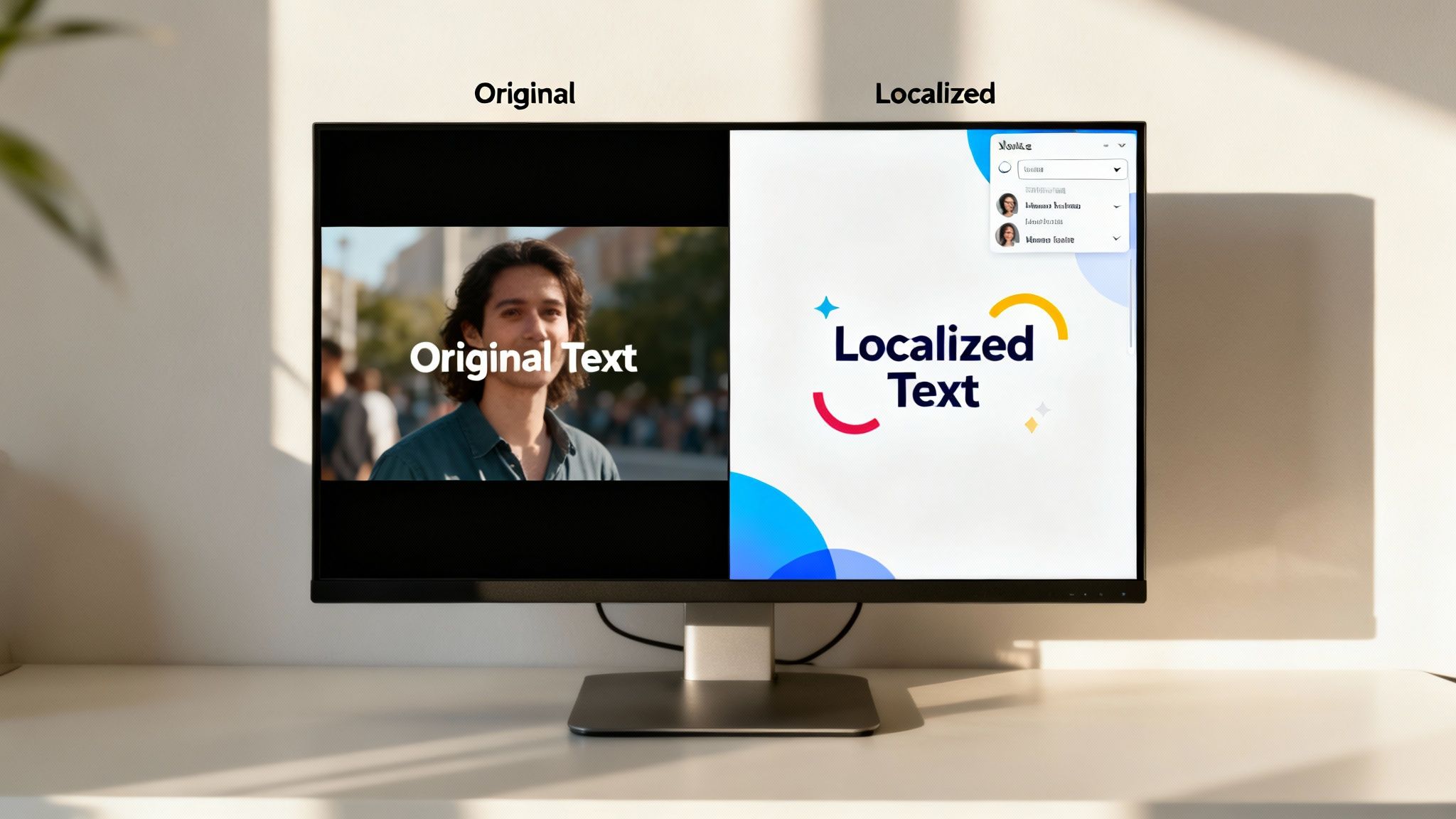
A direct, word-for-word translation is just the starting line. To truly connect with a global audience, your content needs to do more than just speak the language—it has to understand the culture. This is the heart of localization: making your video feel like it was created for a local audience, not just adapted for them.
It’s about catching the cultural nuances that a simple machine translation might miss. A joke that works in one country might be confusing—or worse, offensive—in another. That reference to a local celebrity? It’ll mean nothing to an international viewer. Authentic localization is what keeps your message powerful and relatable.
Go Beyond Words
Getting localization right comes down to the details. It’s about spotting the small things that make a huge difference in how your content lands. Start by reviewing your script for anything that won’t travel well.
- Avoid Idioms and Slang: Phrases like "hit the ground running" rarely have a direct equivalent and just create confusion. Stick to clear, direct language.
- Adapt On-Screen Text: Don't forget about text baked into your video, like graphics, charts, or calls-to-action. These elements also need to be translated.
- Consider Visuals and Symbols: Colors, hand gestures, and even common symbols can carry vastly different meanings across cultures. A thumbs-up, for instance, is positive in most Western countries but deeply offensive in parts of the Middle East.
Fine-Tune The Viewing Experience
Once you’ve nailed the cultural side of the message, it's time to focus on the technical details. A great video translation application will give you all the controls you need to polish the experience for each new audience.
The goal is to make your content so seamless that viewers forget it was ever in another language. Every detail, from the subtitle font to the dubbed voice's tone, contributes to creating that native feel.
To get there, you have to get the subtitles and audio just right. Easy-to-read text and a clear listening experience aren't just nice-to-haves; they're essential for keeping your audience hooked. For more tips on this, you can check out our blog.
Best practices include:
- Subtitle Readability: Choose a clean, simple font and make sure it’s large enough to be read comfortably on any device, especially mobile screens.
- Pacing and Timing: Subtitles need to stay on screen long enough to be read without feeling rushed. Dubbed audio should sync naturally with the speaker's on-screen actions.
- Choose the Right AI Voice: Pick a voice that fits your content’s tone—whether professional, friendly, or high-energy—and feels appropriate for your target market.
Measuring The Success Of Your Global Content
Investing in a video translation application is a smart business move, but like any strategy, you must measure its impact. It’s not enough to just translate your content; you need to know if it’s actually working. Calculating the return on investment (ROI) gives you clear, data-backed proof that your global content strategy is paying off.
This means looking beyond the initial cost of the tool. You need a solid framework to track both direct financial wins and softer benefits, like building long-term brand loyalty. This isn’t just about justifying an expense—it's about making smarter decisions to fine-tune your approach over time.
Key Performance Indicators To Track
To get the full story, you need to monitor a mix of different metrics. These numbers will tell you how your translated videos are performing around the world.
Start by keeping an eye on these core metrics:
- Engagement Rates by Language: Are viewers in Spain watching your videos longer than viewers in France? Compare watch time, likes, comments, and shares for each localized version to see what’s connecting.
- Conversion Rates from Localized Content: Watch how many viewers from specific regions take action after watching a translated video. This could be signing up for a newsletter or making a purchase.
- International SEO Traffic: Check your website analytics for a bump in organic traffic from countries where you've launched translated videos. Seeing higher rankings for non-English keywords is a huge sign you’re on the right track.
- Cost Savings Analysis: Calculate the difference between using a video translation application and the old-school way of hiring translation agencies and voice actors. The savings often show a direct and immediate ROI.
The real goal is to draw a straight line from your localization efforts to your business goals. When you can show that a video translated into German led to a 20% increase in sales from that region, you’ve proven undeniable value.
Getting a handle on how to measure marketing ROI in a wider sense can make your video analysis even more powerful. By tracking these key metrics, you can clearly demonstrate the success of your global content and use that data to fuel future growth.
Common Questions About Video Translation Apps
Jumping into any new technology can feel a bit uncertain, and it's natural to have questions. To help clear things up, here are direct answers to some of the most common queries about using a video translation application.
How Accurate Is The AI Translation?
Today’s AI translation is impressively sharp, often hitting over 95% accuracy for widely spoken languages like English to Spanish. This is more than sufficient for most marketing, training, and social media videos. However, for high-stakes content—like legal or medical instructions—it’s always smart to have a native speaker give it a final review to catch subtle cultural nuances.
Can I Use My Own Voice In Different Languages?
Yes, and this is where things get really exciting. The best platforms now offer voice cloning. The AI analyzes your voice, learning its unique tone, pitch, and rhythm. It then recreates it in another language, so it sounds like you’re the one speaking. This is the closest you can get to being a fluent polyglot yourself and helps maintain your brand's unique sound across all markets.
Is It Difficult To Use A Video Translation App?
Not at all. The leading tools are designed to be incredibly user-friendly. You don't need to be a tech wizard to get great results. The process usually just takes a few clicks:
- Upload Your Video: Drag and drop your file into the app.
- Select Target Languages: Pick the languages you want to translate your video into.
- Generate and Review: The AI automatically handles the transcription, translation, and dubbing.
- Export Your Content: Download your newly localized videos and you’re ready to share them with the world.
The goal of these tools is to let you focus on your message, not on navigating complicated software.
Ready to break language barriers and connect with a global audience? A powerful video translation application is the key to unlocking new markets and scaling your message effortlessly. By automating translation, dubbing, and subtitling, you can create professional, localized content in minutes, not weeks.
With LunaBloom AI, you can create professionally dubbed and subtitled videos in over 50 languages. Start creating your global content today!